 Save to Pinterest
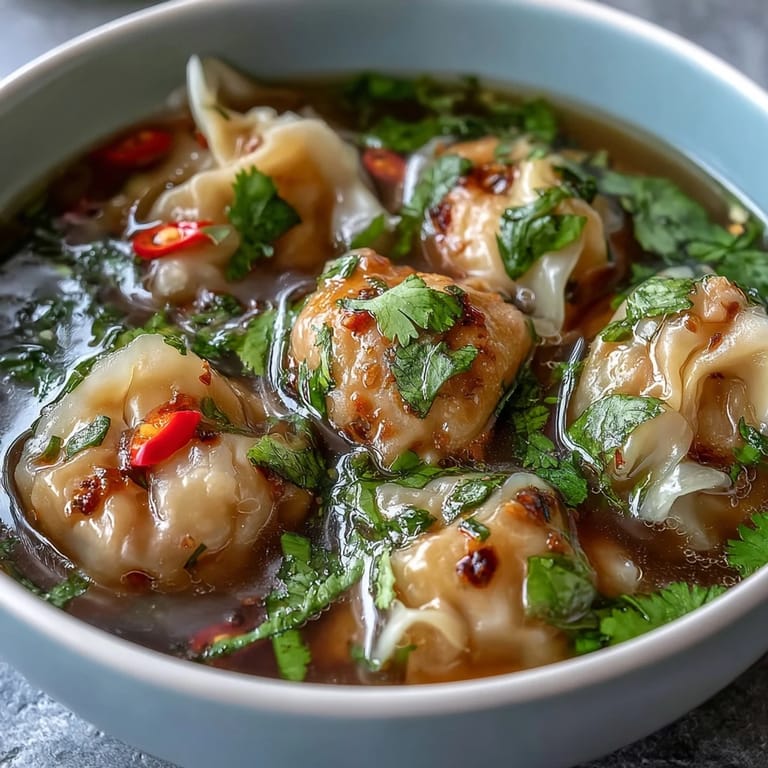
 My first encounter with tom yum soup happened during a chaotic dinner party when a friend arrived with a takeout container and apologized for being late. The aroma that escaped when she opened it stopped everyone mid-conversation, and suddenly the entire apartment smelled like lemongrass, lime, and possibility. Years later, I found myself standing in my own kitchen on a random Tuesday, craving that exact boldness but wanting something more personal, so I decided to fold wontons from scratch and watch them bob through that fiery broth like little edible promises. What emerged was this gorgeous collision of Thai and Chinese cooking traditions, a soup that tastes like it took hours but honestly just needs your attention and a bit of patience. Now it's the dish I make when I want to impress people without spending the whole day in the kitchen.
I made this soup for my sister the night she moved into her new place, when her kitchen was still mostly empty boxes and her fridge had only condiments. We sat on the floor eating it straight from mugs because the boxes with plates hadn't been unpacked yet, and somehow that made it taste even better, like we were sharing something warm and real in the midst of all that chaos and change.
Ingredients
- Ground pork: Choose something with a bit of fat so your wontons stay tender and flavorful inside; chicken works beautifully too if you prefer something lighter.
- Soy sauce: This is your backbone for the filling, adding umami depth that makes each bite sing.
- Sesame oil: Just a teaspoon goes a long way, bringing that toasted, nutty whisper that makes wontons taste authentically Asian.
- Ginger and garlic: Fresh is non-negotiable here; they brighten the filling and wake up your whole mouth.
- Chicken stock: Low-sodium lets you control the seasoning and prevents the broth from becoming oversalty as flavors concentrate.
- Lemongrass: Smash it gently with the side of your knife to release those essential oils that make tom yum sing.
- Kaffir lime leaves: They're worth hunting down in Asian markets because they add a citrus note that lime juice alone simply cannot replicate.
- Galangal: Similar to ginger but more peppery and floral; if you can't find it, ginger substitutes well enough, though the flavor will shift slightly.
- Red chilies: Start with one and taste as you go; heat preferences vary wildly, and you can always add more but can't take it back.
- Fish sauce: This is the secret weapon that transforms the broth into something impossibly complex and savory; trust it even though it smells funky in the bottle.
- Lime juice: Freshly squeezed makes an enormous difference, cutting through the richness and brightening everything.
- Bok choy or spinach: Adds color, nutrition, and a delicate texture that contrasts beautifully with the chewy wontons.
Tired of Takeout? 🥡
Get 10 meals you can make faster than delivery arrives. Seriously.
One email. No spam. Unsubscribe anytime.
Instructions
- Mix the wonton filling with intention:
- Combine your ground pork with soy sauce, sesame oil, ginger, garlic, spring onion, and white pepper in a bowl, stirring until everything is evenly distributed. The mixture should smell aromatic and taste balanced, not aggressively salty.
- Fold your wontons like you mean it:
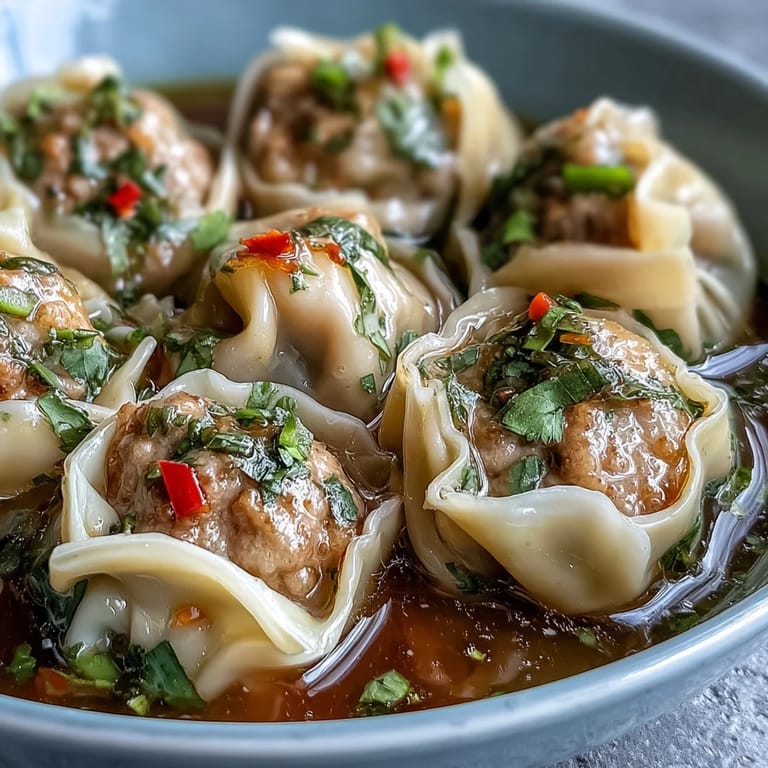
- Place about a teaspoon of filling in the center of each wrapper, wet the edges with water, and fold into a triangle, then bring the two corners together and press to seal. It's less about perfection and more about ensuring they're sealed tight enough so the filling doesn't escape into the broth.
- Build your broth foundation:
- Bring chicken stock to a gentle simmer in a large pot, then add lemongrass, kaffir lime leaves, galangal, and chilies, letting everything steep for about 10 minutes so the broth becomes fragrant and alive.
- Layer in vegetables and flavor:
- Add sliced mushrooms and quartered tomatoes to the simmering broth and let them soften for 5 minutes, then fish out the large aromatics (lemongrass, galangal, kaffir lime leaves) with a slotted spoon so the broth stays clear and elegant.
- Season to your taste:
- Stir in fish sauce, lime juice, and sugar, then taste and adjust; this is your moment to personalize the broth, so don't be shy about adding more lime for tang or fish sauce for depth.
- Cook the wontons gently:
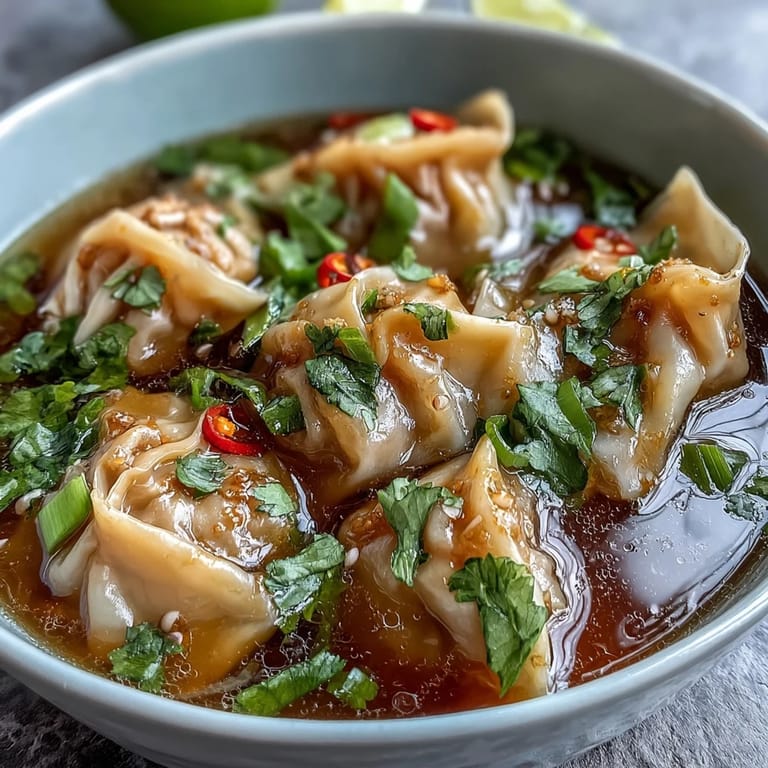
- Drop your folded wontons into the simmering broth and watch them float to the surface after 4 to 5 minutes, which means they're cooked through and ready to shine. Add shrimp at the same time if you're using them.
- Finish with freshness:
- Add the bok choy or spinach right at the end, letting it wilt for just a minute so it stays bright green and crisp-tender. Ladle everything into bowls and crown each one with coriander, spring onions, a lime wedge, and a drizzle of chili oil if you want extra heat.
 Save to Pinterest
 One afternoon, I invited my neighbor over for lunch, this quiet person I'd chatted with maybe twice before, and we ended up talking for three hours over this soup, talking about food and family and the places we'd traveled. She told me that the combination of wontons and tom yum reminded her of her grandmother's kitchen in Bangkok, and watching her face light up as she recognized those flavors made me understand that food is really just love in edible form.
The Magic of Wonton Folding
There's something almost meditative about folding wontons, a rhythm that emerges after the first few, your fingers learning the motions without you having to think too hard. I used to fold them hastily, just trying to get them done, until a friend pointed out that wontons folded with attention taste different than wontons folded in a rush. Now I put on music or a podcast and let the folding become part of the cooking experience rather than just a chore before the real cooking begins. It sounds silly, but the care you put into forming them genuinely translates to how they taste in the final bowl.
Understanding Tom Yum Balance
Tom yum is essentially a conversation between heat, sour, salty, and aromatic, and the beauty is that you get to decide where that conversation leans. Some people want the broth to make them sweat and gasp for water, while others prefer it as a gentle warm embrace with just a whisper of spice. The first time I made this, I added fish sauce and lime at the same time without tasting, and the result was too aggressive in one direction until I learned to add a little, taste, adjust, add more, taste again. That patience with seasoning is what separates a soup that tastes just okay from one that people ask you to make again and again.
Scaling and Storing Tips
This recipe scales beautifully if you're feeding a crowd or want leftovers for the week, and the broth actually tastes better on day two as flavors continue to deepen and marry together. I usually make the broth and wontons separately, storing them in different containers in the fridge so I can reheat the broth gently and cook wontons fresh, which keeps everything from becoming soft or waterlogged.
- Freeze extra wontons on a baking sheet first, then transfer to a bag, and cook them straight from frozen by adding a minute or two to the cooking time.
- The broth keeps for up to four days in the fridge and tastes even more complex after sitting, making it perfect for meal prep or having comfort food ready to go.
- Bring broth back to a gentle simmer before adding fresh wontons or other components, never a hard boil which can break apart delicate dumplings.
 Save to Pinterest
 This soup has become my answer to almost every cooking question now: when someone asks what to make for dinner, what brings people together, what tastes impressive but doesn't require restaurant-level skills, I point them here. It's bold and balanced and deeply forgiving, and honestly, that's probably why I keep making it.
Common Questions
- → Can I make the wontons ahead of time?
Yes, you can prepare wontons up to 24 hours in advance. Store them in a single layer on a parchment-lined tray, cover with plastic wrap, and refrigerate. You can also freeze them for up to 3 months and cook directly from frozen, adding 2-3 extra minutes to cooking time.
- → What can I substitute for galangal?
Fresh ginger makes an excellent substitute for galangal, though it will provide a slightly different flavor profile. Use the same quantity as called for in the ingredient list. Galangal has a more citrusy, pine-like taste, while ginger is more peppery and warm.
- → How do I adjust the spice level?
Control the heat by adjusting the number of red chilies used. Start with 1-2 chilies for mild heat, or remove the seeds for less spice. You can always add more chili oil at serving time for those who prefer extra heat without affecting the entire batch.
- → Can this soup be made vegetarian?
Absolutely. Replace the pork with crumbled firm tofu or finely chopped mushrooms in the wontons. Use vegetable stock instead of chicken stock, and substitute fish sauce with soy sauce or tamari. Omit the shrimp or add extra vegetables like baby corn or bean sprouts.
- → How should I store leftovers?
Store the broth and wontons separately if possible, as the wontons will continue to absorb liquid and may become mushy. Refrigerate both in airtight containers for up to 3 days. Reheat gently on the stovetop, adding fresh greens and garnishes when serving.
- → What type of mushrooms work best?
Shiitake mushrooms provide the most authentic flavor and meaty texture, but button, cremini, or oyster mushrooms all work well. For deeper umami flavor, use a combination of fresh and dried mushrooms, rehydrating the dried ones in warm water first.