 Save to Pinterest
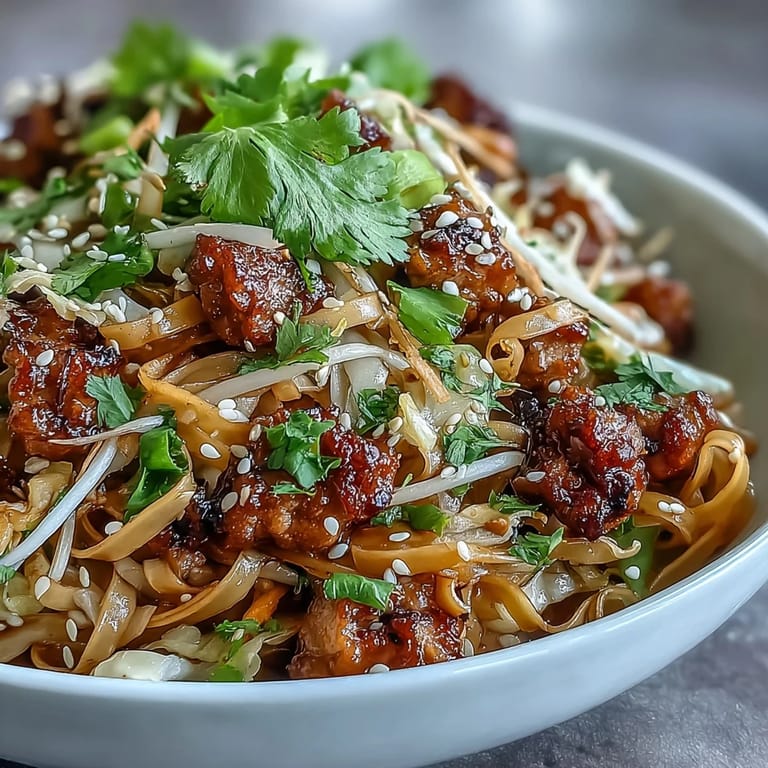
 The smell of browning pork and sesame oil hit me the moment I walked into my neighbor's kitchen one rainy Tuesday. She was tossing noodles in a wide pan, and I asked what she was making. "Potstickers," she said, "but lazy style." That offhand comment stuck with me, and by the weekend I had my own version bubbling away on the stove. It turns out you can capture every bit of that dumpling magic without crimping a single wrapper. Now this bowl is my go-to when I want something cozy, a little messy, and completely satisfying.
I made this for my brother the night he came home from a long trip. He was exhausted, barely talking, but after the first bowl he looked up and said, "This tastes like the dumplings we used to get on Saturdays." I hadn't even told him what I was going for. That moment reminded me how food can say things we don't have words for. Since then, this bowl has become my quiet way of welcoming people home.
Ingredients
- Rice noodles: They soak up the sauce beautifully and stay tender without getting gummy, just rinse them quickly after cooking to stop the starch from clumping.
- Ground pork: The fat content gives the dish richness and helps those crispy golden edges form when you resist stirring too soon.
- Soy sauce and sesame oil: These are the backbone of the dumpling flavor, toasted sesame oil especially brings that nutty warmth you expect in every bite.
- Cornstarch: Mixed into the meat, it creates a slightly sticky, velvety texture that clings to the noodles instead of crumbling apart.
- Fresh ginger and garlic: Grate the ginger finely so it melts into the sauce, and mince the garlic small enough that it blooms in the hot oil without burning.
- Green cabbage and carrots: They add crunch and a touch of sweetness, balancing the salty, savory sauce without overpowering it.
- Shiitake mushrooms: Their earthy flavor deepens the umami, and they soften just enough to feel like part of the filling rather than an afterthought.
- Rice vinegar: A splash of acidity brightens the whole bowl and cuts through the richness of the pork and sesame oil.
- Chili-garlic sauce: This is where you control the heat, start with a tablespoon and taste as you go, it should warm your tongue without making you wince.
- Green onions and cilantro: Scatter them on top at the end for freshness and a pop of color that makes the bowl feel alive.
Tired of Takeout? 🥡
Get 10 meals you can make faster than delivery arrives. Seriously.
One email. No spam. Unsubscribe anytime.
Instructions
- Prepare the noodles:
- Boil the noodles until they are just tender, then drain and rinse them briefly under cold water to stop the cooking. Toss them with a few drops of oil so they don't stick together while you work on everything else.
- Season the meat:
- Whisk the soy sauce, sesame oil, cornstarch, white pepper, sugar, and salt together, then pour it over the ground pork and mix gently until the meat feels sticky and well coated. If you are using minced napa cabbage, fold it in now for extra moisture and a hint of crunch.
- Make the sauce:
- Combine soy sauce, rice vinegar, oyster sauce, chili-garlic sauce, sesame oil, brown sugar, and chicken broth in a bowl, whisking until the sugar dissolves completely. Taste it now and adjust the heat or sweetness to match your mood.
- Prepare the vegetables:
- Shred the cabbage and carrots, slice the mushrooms thin, and separate the white and green parts of the scallions. Keep everything within reach because once the pan heats up, things move fast.
- Brown the meat:
- Heat a tablespoon of oil in a large skillet over medium-high heat, then add the seasoned pork in an even layer and let it sit undisturbed for a few minutes to develop crispy, golden edges. Break it up and cook through, then spoon off any excess fat if the pan looks too greasy.
- Add aromatics:
- Push the meat to one side, add another tablespoon of oil to the empty space, and toss in the garlic, ginger, and white parts of the green onions. Stir for about a minute until the smell hits you, then mix everything together.
- Cook vegetables:
- Add the mushrooms first and let them soften for a couple of minutes, then toss in the cabbage and carrots and stir-fry until the cabbage wilts but still has some bite. If the pan looks dry, splash in a little water to keep things moving.
- Combine with sauce:
- Pour the prepared sauce over the meat and vegetables, tossing everything to coat evenly. Let it simmer for a minute or two until the sauce thickens just enough to cling to the ingredients.
- Add noodles:
- Add the cooked noodles to the skillet and toss gently but thoroughly, making sure every strand gets coated in the sauce. If it looks too dry, add a few tablespoons of water or broth, and toss in the bean sprouts during the last minute if you are using them.
- Finish and serve:
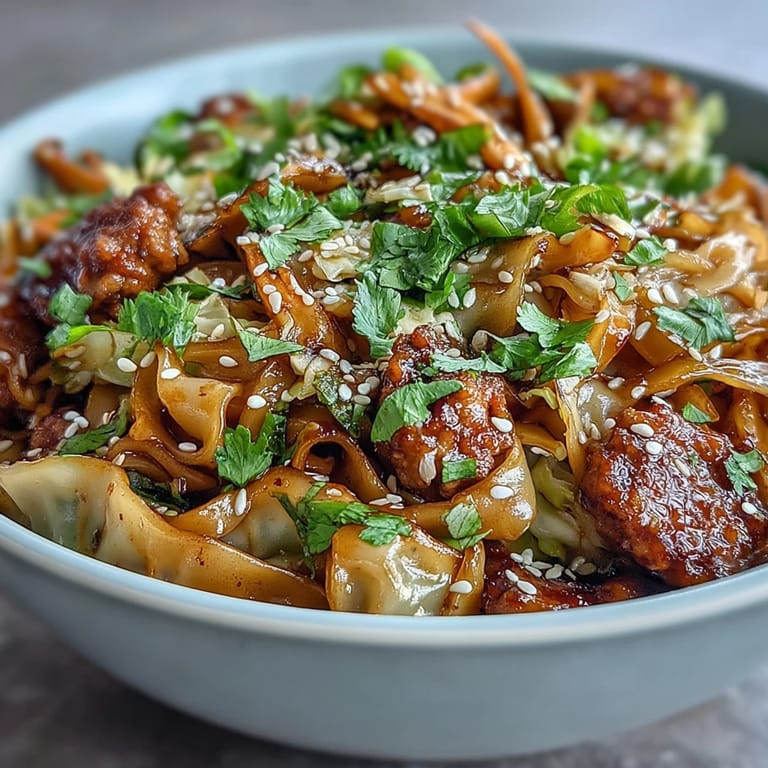
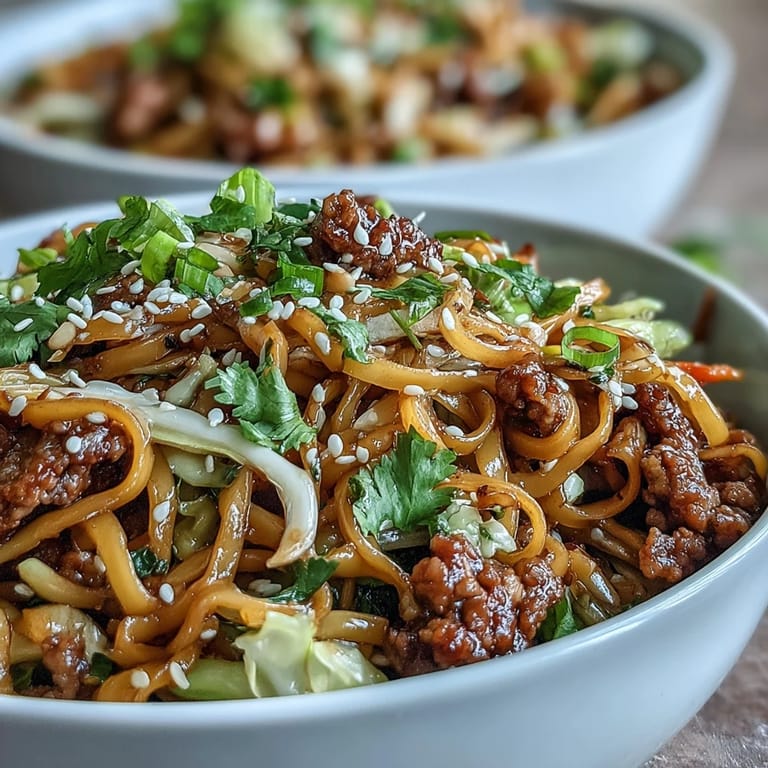
- Taste and adjust the seasoning with more soy sauce, chili-garlic sauce, or a squeeze of lime, then stir in half of the green onion tops and turn off the heat. Divide the noodles between bowls and garnish with the remaining green onions, cilantro, and toasted sesame seeds.
 Save to Pinterest
 One night I doubled the batch without thinking, and by the time I realized what I had done, the pan was overflowing. My partner and I stood at the counter eating straight from the skillet, laughing at the mess we made. That is when this dish stopped being just dinner and became something we look forward to, a little chaotic, a little indulgent, and always worth it.
What to Do with Leftovers
Leftovers keep well in the fridge for up to three days, though the noodles will soak up more sauce as they sit. When you reheat them, add a splash of water or broth to loosen everything up and bring back that glossy, saucy texture. I have also fried leftovers in a hot pan with a little oil until the edges get crispy, turning them into something closer to a noodle pancake. It is a different dish entirely, but just as good.
How to Adjust the Heat
If you are sensitive to spice, start with just a teaspoon of chili-garlic sauce and taste the sauce before adding it to the pan. You can always stir in more at the end or serve extra on the side for people who want it. I have learned that a squeeze of lime at the table can temper the heat without losing flavor, and a sprinkle of sugar in the sauce can round out the burn if you go too far. Heat should wake up your palate, not punish it.
Making It Your Own
This recipe is forgiving and open to change. Swap ground turkey or beef for the pork, or use crumbled tofu if you want to keep it plant-based. Napa cabbage, baby bok choy, or finely chopped kale can stand in for green cabbage, and snap peas or bell peppers add color and crunch. If you want richness, top each bowl with a soft-boiled or fried egg so the yolk runs into the noodles when you break it.
- Try adding a handful of edamame or snow peas during the vegetable stage for extra protein and color.
- Garnish with crispy fried shallots or garlic for a crunchy, savory topping that adds another layer of texture.
- Serve with a side of quick pickled cucumbers or radishes to cut through the richness and refresh your palate between bites.
 Save to Pinterest
 This bowl has a way of making ordinary evenings feel special, even when you are just standing at the counter with a pair of chopsticks. I hope it becomes one of those recipes you turn to when you want something that feels like a hug and tastes like home.
Common Questions
- → Can I use different noodles?
Yes! Rice noodles work beautifully for gluten-free options, while lo mein, udon, or even spaghetti make great substitutes. Just adjust cooking time according to package directions.
- → What protein alternatives work well?
Ground chicken, turkey, beef, or plant-based crumbles all season perfectly with the dumpling-style blend. The key is browning it well for those crispy, flavorful edges.
- → How do I make this gluten-free?
Use rice noodles and swap regular soy sauce for tamari or coconut aminos. Choose gluten-free oyster sauce or hoisin, and you're good to go.
- → Can I prep this ahead?
Pre-shred vegetables and mix the sauce up to 2 days ahead. Cook fresh for best texture, though leftovers refrigerate well for 3 days—reheat with a splash of water.
- → How spicy is this dish?
The chili-garlic sauce adds moderate heat you can adjust. Start with 1 tablespoon and add more to taste, or omit for a mild version everyone enjoys.