 Save to Pinterest
 The first time I truly understood tom yum was when a Bangkok street vendor handed me a steaming bowl on a sweltering afternoon, and I watched her work with such ease—bruising herbs, tasting broth mid-simmer, adjusting everything by feel. That soup tasted like nothing I'd ever made before, electric and alive in a way that felt impossibly simple yet perfectly balanced. Years later, I realized her secret wasn't some hidden technique but respect for each ingredient's voice: the sharpness of lemongrass cutting through richness, lime juice arriving just at the end to brighten everything. Now when I make this at home, I chase that same spirit—the kind of cooking where you taste constantly and trust your instincts.
I remember bringing this soup to a dinner party where someone's partner mentioned they couldn't eat most soups—too heavy, too creamy. One spoonful of this, and they went quiet for a moment, then asked for seconds. There's something about tom yum's clarity, the way it refreshes your palate with each sip instead of coating it, that makes people feel seen and understood. That bowl became a conversation starter, and suddenly everyone was leaning forward, asking about the ingredients, wanting to know if they could make it at home.
Ingredients
- Boneless, skinless chicken thighs or breasts (400 g), thinly sliced: Thighs stay juicier than breasts, but either works if you slice them thin so they cook quickly and stay tender in the broth.
- Chicken stock (1.2 liters): Quality matters here—a homemade or low-sodium store-bought version lets the herbs sing without overwhelming everything with salt.
- Lemongrass stalks (2), trimmed and smashed: This is the heart of tom yum; bruising it before cooking releases those bright, almost citrusy oils that make the soup unmistakably Thai.
- Fresh galangal slices (4 slices, about 12 g), or dried galangal (2 tsp): It's peppery and slightly medicinal in the best way, but if you can't find it, a small piece of ginger is an honest substitute.
- Makrut lime leaves (5), torn into pieces: These add a floral, complex citrus note that you absolutely cannot fake with regular lime—hunt them down fresh or frozen, not dried.
- Birds eye chilies (4), lightly crushed: Tiny but powerful; leave them whole if you want gentle heat, crush them for more fire, or add extra if you love feeling that warmth building as you eat.
- Mushrooms (150 g), sliced: Oyster mushrooms soak up broth beautifully, but button mushrooms work too and add a subtle umami depth.
- Tomatoes (2 medium), cut into wedges: Their acidity balances the richness of the broth, and wedges soften naturally without falling apart.
- Onion (1 small), sliced: It sweetens the broth slightly and disappears into the background, which is exactly what you want.
- Garlic cloves (3), smashed: Smashing rather than mincing releases their flavor more gently into the broth.
- Fish sauce (3 tbsp): This is non-negotiable for authentic flavor; it's salty and funky in a way that deepens everything, not something you taste directly.
- Fresh lime juice (2 tbsp), plus more to taste: Add it at the end so it stays bright and doesn't lose its zing to the heat.
- Sugar (1 tsp): A tiny amount rounds out the flavors and balances the heat and sourness without making anything sweet.
- Salt (½ tsp), or to taste: You're tasting and adjusting at the end anyway, so this is just a starting point.
- Fresh cilantro (2 tbsp), chopped: Some people skip it, but it adds a peppery freshness that ties everything together.
- Spring onions (1–2), thinly sliced: They bring a gentle onion bite and color right before you serve.
- Extra lime wedges: Everyone squeezes their own at the table, adjusting the sourness to exactly what they want.
Tired of Takeout? 🥡
Get 10 meals you can make faster than delivery arrives. Seriously.
One email. No spam. Unsubscribe anytime.
Instructions
- Bruise your aromatics:
- Take the lemongrass stalks, galangal slices, and makrut lime leaves and smash them against your cutting board with the back of a knife or the side of a spoon. You're not trying to destroy them, just crack them open so all those fragrant oils can escape into the broth—you'll smell the difference immediately.
- Build the broth foundation:
- Pour your chicken stock into a large pot and bring it to a rolling boil. Add the smashed lemongrass, galangal, torn makrut leaves, lightly crushed chilies, and smashed garlic all at once, then turn the heat down slightly and let it simmer uncovered for 5 minutes. This is when your kitchen fills with that unmistakable tom yum aroma.
- Add the chicken and onion:
- Slide in your thinly sliced chicken and onion pieces, stirring gently to separate any pieces that stick together. Simmer for 8–10 minutes, skimming off any white foam that rises to the surface—this keeps your broth clear and clean tasting.
- Finish with vegetables:
- Drop in the mushroom slices and tomato wedges, letting them cook for another 5–7 minutes until the mushrooms are tender and the chicken is cooked through. Taste a piece of chicken if you're unsure; there should be no pink inside.
- Season and balance:
- Stir in the fish sauce, lime juice, sugar, and salt, then taste a spoonful. This is your moment to adjust—add more lime if you want more brightness, more fish sauce if you want more depth, more sugar if you want to round out the heat. The soup should feel alive and balanced, no single flavor overpowering the others.
- Finish and serve:
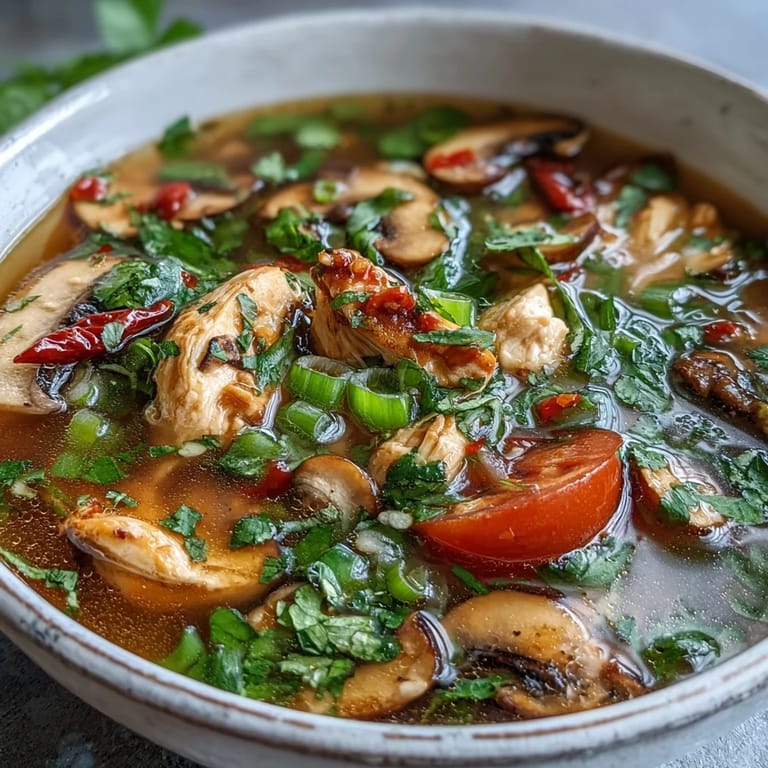
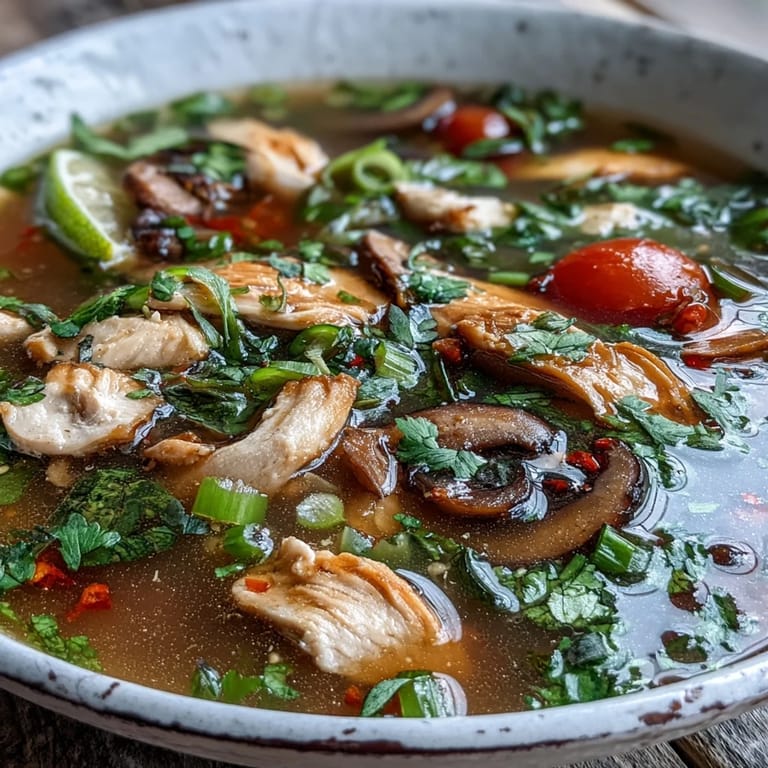
- Remove from heat and discard the larger lemongrass and galangal pieces if you prefer a cleaner look, though leaving them in is traditional and beautiful. Ladle the soup into bowls and top with cilantro, sliced spring onions, and offer lime wedges on the side so everyone can adjust their own bowl.
 Save to Pinterest
 There was one evening when my partner came home exhausted, and I had this simmering on the stove—nothing fancy, just a regular weeknight. The moment they walked in, they stopped at the kitchen door, closed their eyes, and breathed in that lemongrass and lime steam. They told me later that for just those few seconds, they forgot about work, about stress, and felt like they were somewhere else entirely. That's when I understood that this soup isn't about impressing anyone; it's about creating a moment where good food does what it's supposed to do—it heals a little.
Why Fresh Aromatics Matter So Much
I learned this the hard way by trying to substitute dried lemongrass for fresh and ending up with a soup that tasted flat and dusty instead of vibrant. Fresh lemongrass, galangal, and makrut leaves have volatile oils that dried versions just can't match—they're living ingredients that open up when you bruise them. If you live somewhere where fresh isn't available, frozen works better than dried, and it's worth ordering online because the difference is genuinely life-changing once you taste it side by side.
The Art of Tasting and Adjusting
Tom yum teaches you something important about cooking in general: the recipe is a starting point, not gospel. Every lime is different in acidity, every fish sauce brand varies in intensity, and your personal preference for heat and sourness is the only thing that matters. I keep my lime wedges and a small bowl of fish sauce next to the stove, ready to keep adjusting right up until I ladle the first spoonful. This soup rewards you for paying attention and trusting your own taste buds.
Variations and Extensions
Once you've made tom yum chicken a few times and understand how the flavors work, you can start playing with it. Swap the chicken for shrimp and you have tom yum goong, which cooks even faster and has its own elegance. Add a splash of coconut milk or evaporated milk at the very end if you want something slightly richer—it doesn't make it less authentic, just different and delicious in a new way. Serve it with jasmine rice on the side, and people will think you've been doing this your whole life.
- Try adding a tablespoon of Thai curry paste to the broth for deeper complexity if you ever want to swing it that direction.
- Fresh Thai basil scattered on top at the last second adds an anise-like note that some people absolutely cannot live without.
- Leftover tom yum keeps for three days in the fridge and actually tastes better the next day once all the flavors have had time to meld together.
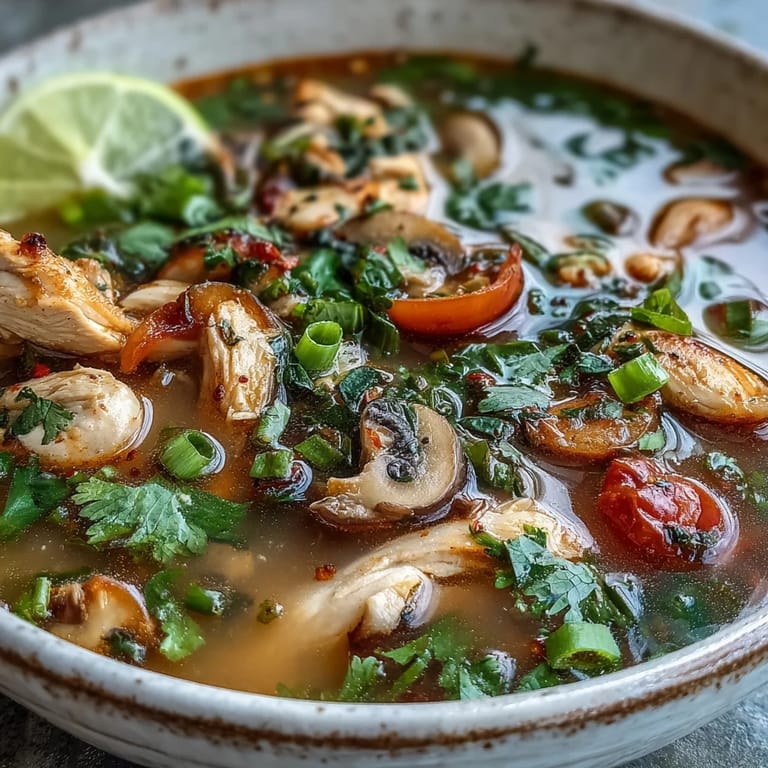 Save to Pinterest
 Tom yum stopped being just a recipe the moment I understood that cooking it is an act of generosity—toward the ingredients, toward the people eating it, and toward yourself. Every time I make it, it brings something new to the table.
Common Questions
- → Can I use chicken breast instead of thighs?
Yes, chicken breast works well, though thighs remain more tender and flavorful during simmering. Slice breast meat thinly to ensure quick, even cooking.
- → What can I substitute for galangal?
Fresh ginger can substitute in a pinch, though it lacks galangal's distinctive citrusy, pine-like notes. Use slightly less ginger as it has a sharper flavor.
- → How spicy is Tom Yum Chicken?
With four birds eye chilies, it delivers moderate to high heat. Adjust by reducing chilies or removing seeds. You can always add chili oil at the table for individual preferences.
- → Can I make this soup ahead of time?
Yes, the soup keeps well refrigerated for up to 3 days. Store herbs separately if possible and add fresh lime juice just before serving to maintain brightness.
- → Is Tom Yum Chicken authentically Thai?
Absolutely. This version honors traditional Thai cooking methods and ingredients, creating the signature hot and sour profile central to authentic Tom Yum soups.
- → What type of mushrooms work best?
Oyster and straw mushrooms are traditional choices, but button, shiitake, or cremini mushrooms work excellently and are more widely available.