 Save to Pinterest
 There's something almost meditative about the moment when curry paste first hits hot oil—that sharp inhale you take before the kitchen fills with such an intoxicating perfume that you forget what you were doing. I discovered this soup on a gray Tuesday when I had exactly forty minutes before friends were arriving and nothing in my freezer but chicken thighs. What started as a scramble became my most-requested dinner, the kind that people text about days later asking for the recipe.
I made this for my sister during her first week of a new job, when she was too exhausted to think about cooking but too stressed to want takeout. Watching her shoulders relax with the first spoonful reminded me why soup exists—it's more than sustenance, it's a small gesture that says you've been thought of.
Ingredients
- Chicken thighs or breasts, 400 g cut into bite-sized pieces: Thighs stay more forgiving and tender than breasts, but either works—just don't skip cutting them small so they cook through quickly.
- Fresh ginger, 1 tbsp finely grated: Microplane it if you have one, or use the back of a spoon to really get that juice working; the fresher it smells, the better your soup will taste.
- Garlic, 3 cloves minced: Don't use pre-minced here—the few seconds it takes to mince fresh garlic actually changes everything.
- Shallots, 2 thinly sliced: They're subtler than onions and cook down into almost nothing, adding sweetness without overpowering.
- Red curry paste, 2 tbsp: This is where your flavor comes from, so grab a good brand; it should smell aggressively aromatic, not dusty.
- Coconut milk, 400 ml full-fat: The full-fat version isn't a luxury here—it's what gives the soup its silky character, so don't reach for lite.
- Chicken broth, 750 ml: Homemade is wonderful if you have it, but quality store-bought works just fine.
- Fish sauce, 1 tbsp: It smells funky in the bottle, but trust it; this is the secret depth that makes people ask what your ingredient is.
- Soy sauce, 1 tbsp gluten-free if needed: A tiny bit balances the richness and adds umami you didn't know you needed.
- Brown sugar, 1 tsp: Just enough to round out the heat and salt without making anything sweet.
- Lime juice, 1 whole lime: Squeeze it fresh right before serving—bottled juice misses the brightness entirely.
- Red bell pepper, 1 thinly sliced: The slight sweetness and tender crunch keeps things interesting through the whole bowl.
- Shiitake mushrooms, 100 g sliced: Their earthy depth makes ordinary curry taste almost luxurious.
- Snow peas, 100 g trimmed: They stay crisp-tender and add a clean sweetness that brightens everything.
- Fresh cilantro and Thai basil for garnish: Don't skip these—cilantro brings freshness and basil adds a subtle peppery note that feels sophisticated.
Tired of Takeout? 🥡
Get 10 meals you can make faster than delivery arrives. Seriously.
One email. No spam. Unsubscribe anytime.
Instructions
- Toast your aromatics:
- Heat oil in a large pot over medium heat, then sauté the shallots, ginger, and garlic for about two minutes until the kitchen smells like every good Thai meal you've ever had. You'll know it's right when the garlic turns just barely golden at the edges.
- Wake up the curry paste:
- Stir in the red curry paste and let it cook for exactly one minute, stirring almost constantly—this releases its deep, complex flavor into the oil so it distributes beautifully throughout the soup instead of clumping up later.
- Coat the chicken:
- Add your bite-sized chicken pieces and stir everything together for two to three minutes so each piece gets coated in that fragrant paste mixture. The chicken won't be cooked through yet, but it will start to change color at the edges.
- Build your broth:
- Pour in the chicken broth and coconut milk slowly, stirring as you go, then bring everything to a gentle simmer. You're looking for quiet bubbles breaking the surface, not a rolling boil.
- Season and balance:
- Add the fish sauce, soy sauce, and brown sugar, then stir well to make sure everything dissolves. Taste a small spoonful of broth before moving on—this is your chance to adjust the salt and sweetness to your preference.
- Cook the vegetables:
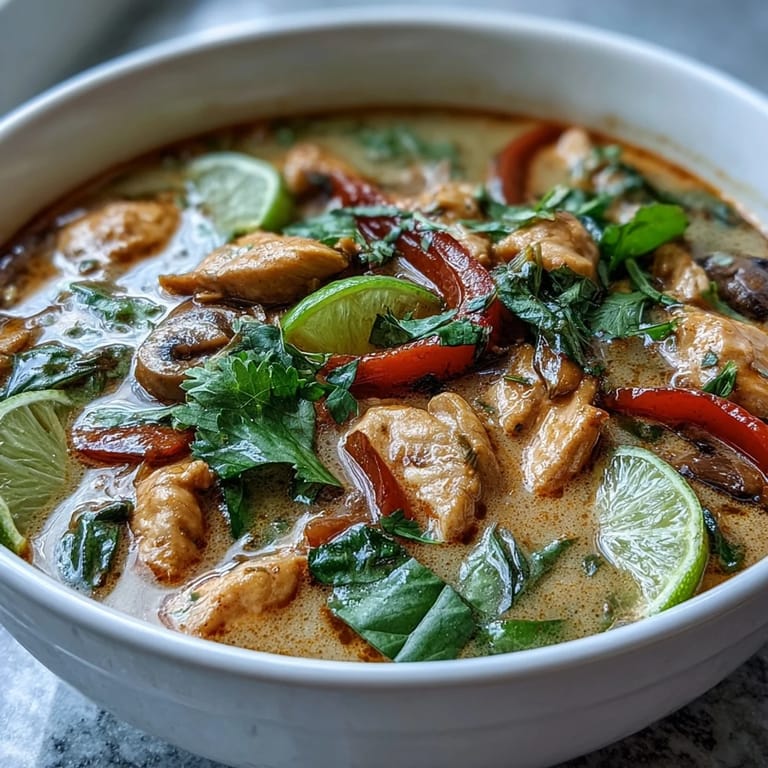
- Add the bell pepper, mushrooms, and snow peas and simmer for ten to twelve minutes until the chicken is completely cooked through and the vegetables are tender but still have a slight bite. The longer you wait, the softer everything becomes, so don't walk away too long.
- Brighten with lime:
- Squeeze in your lime juice just before serving and give everything a final stir—this cuts through the richness and makes the soup feel suddenly alive and balanced.
- Finish and serve:
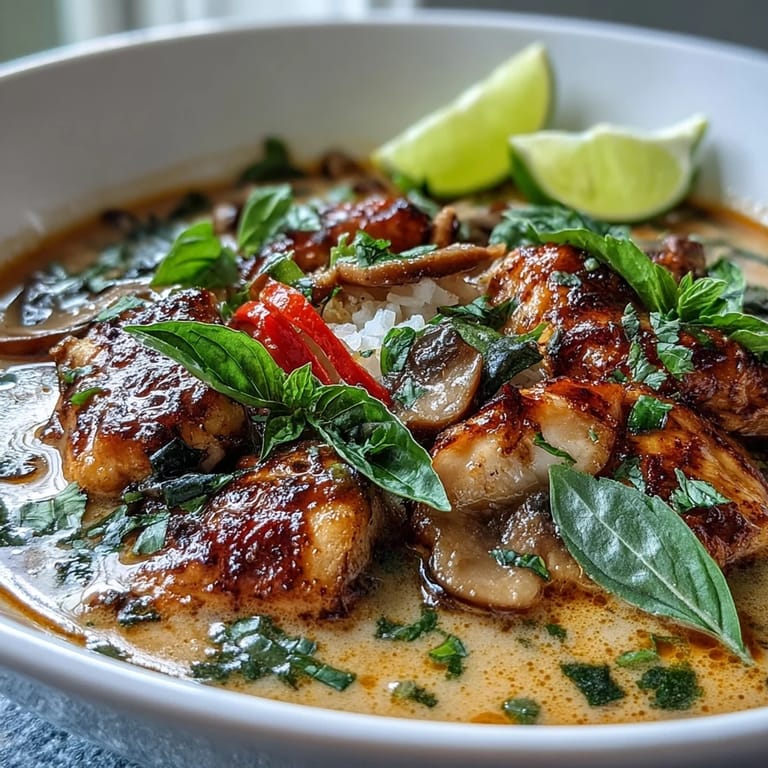
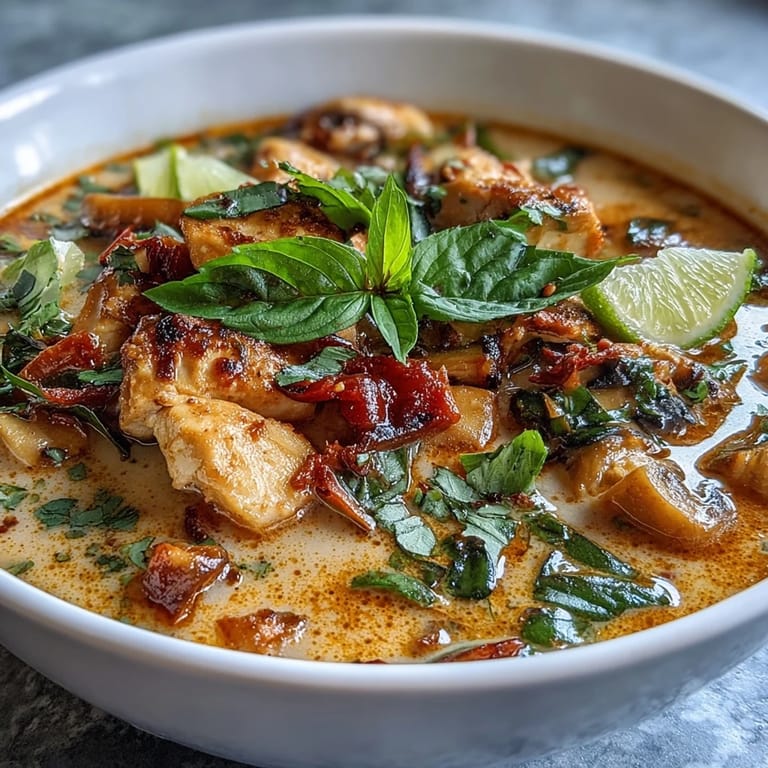
- Ladle into bowls and shower each one with cilantro, Thai basil, a few chili slices if you like heat, and a lime wedge on the side. Some people like to squeeze that lime wedge in at the table, which is kind of nice.
 Save to Pinterest
 One evening, my neighbor smelled this soup simmering and knocked on my door with the kind of hopeful look people get when something smells impossibly good. We ended up sitting at my kitchen counter with two bowls, talking until the soup went cold, and I realized that some dishes have a way of turning ordinary moments into the kind of evening you remember.
The Magic of Curry Paste
Red curry paste is where this soup's entire personality lives, and it's worth understanding what's actually in it so you know what you're bringing to the table. It's usually a blend of red chilies, garlic, shallots, galangal, lemongrass, shrimp paste, and salt, all ground together into a concentrated punch of flavor. The beauty is that you don't need to make it from scratch—a good store-bought version does all the heavy lifting for you, letting you focus on everything else.
Customizing Your Curry
This soup is wonderfully flexible, which is partly why it's become such a regular dinner at my house. Swap the chicken for shrimp if you want something lighter, or use extra-firm tofu if you're cooking for vegetarian friends—just switch to vegetable broth and skip the fish sauce or replace it with a bit of soy sauce. You can add cooked rice noodles to make it heartier, or stir in a handful of baby spinach if you want more greens.
Serving and Storage
This soup tastes even better the next day when all the flavors have gotten to know each other, so don't hesitate to make a double batch. It keeps in the refrigerator for three days and freezes beautifully for up to three months, though I'd add the fresh herbs and lime juice after reheating so they stay bright.
- Pair it with a chilled Riesling or a crisp Sauvignon Blanc if you're in the mood for wine.
- Serve with jasmine rice on the side or eat it as a standalone bowl depending on how hungry you are.
- Make extra cilantro and basil available at the table so people can adjust the herbaceousness to their liking.
 Save to Pinterest
 This soup has quietly become my answer to so many different dinner situations—when I'm cooking for friends, when I need comfort food, when I want something that tastes impressive without being complicated. It's the kind of dish that reminds you why you started cooking in the first place.
Common Questions
- → Can I use chicken breast instead of chicken thighs?
Yes, chicken breast works perfectly in this soup. Cut into bite-sized pieces and be careful not to overcook, as breast meat can become dry. Thighs remain slightly more tender due to higher fat content.
- → How can I make this soup vegetarian?
Substitute chicken with firm tofu or extra vegetables. Use vegetable broth instead of chicken broth, and replace fish sauce with soy sauce or tamari for the umami flavor.
- → What can I substitute for fish sauce?
Use additional soy sauce or tamari with a pinch of salt for depth. While the flavor profile differs slightly, it still provides the necessary savory element to balance the coconut milk's sweetness.
- → Can I make this soup ahead of time?
Yes, prepare the soup up to 2 days in advance and store in the refrigerator. The flavors actually deepen overnight. Reheat gently and add fresh garnishes just before serving for the best presentation.
- → How do I adjust the spice level?
Start with 1 tablespoon of red curry paste for mild heat, or increase to 3 tablespoons for a spicier version. Add fresh sliced chilies or chili flakes at the end to customize heat to your preference.
- → What type of coconut milk should I use?
Full-fat coconut milk creates the richest, creamiest texture. Light coconut milk can be used for fewer calories, but the soup will be less creamy. Avoid coconut cream as it's too thick.