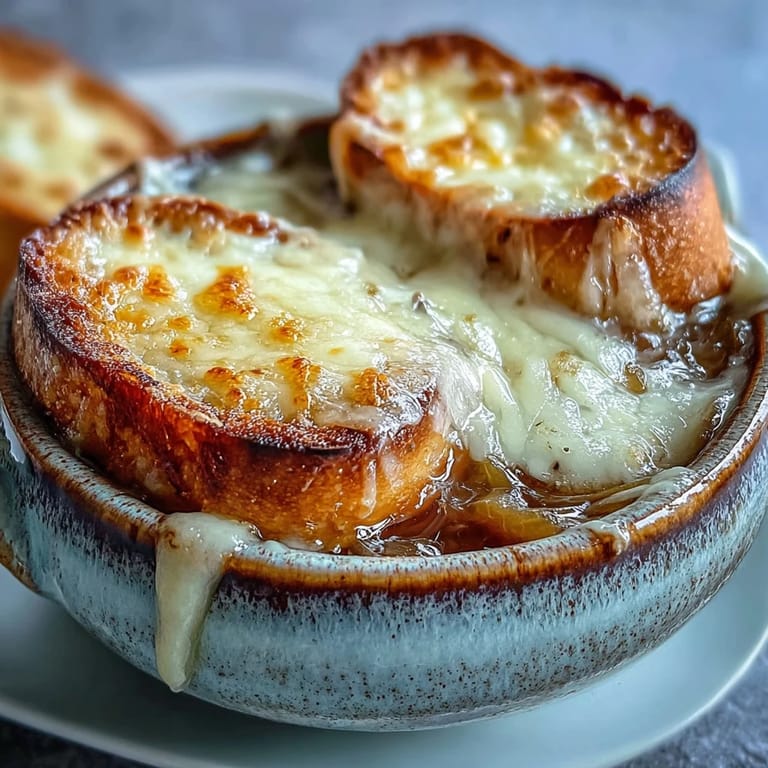
 Save to Pinterest
 My neighbor Marie once described French onion soup as the sound of patience in a bowl, and I didn't understand until the first time I made it properly. I'd rushed through the caramelization before, treating it like a chore, but that afternoon when the kitchen filled with the deep, sweet aroma of onions turning golden brown, something clicked. The soup taught me that some things can't be hurried, and the best results come from simply staying present while butter and time do their magic.
I made this soup on a gray November evening for friends who showed up complaining about the cold, and by the time the cheese finished bubbling under the broiler, everyone had forgotten why they were cold to begin with. Watching them blow on those steaming spoonfuls and close their eyes at the first taste reminded me why cooking matters—it's not really about the ingredients, it's about creating a moment where people feel taken care of.
Ingredients
- 6 large yellow onions, thinly sliced: Yellow onions have the perfect sugar content and sweetness when caramelized, so don't be tempted by white or red varieties—this is where they shine.
- 2 tablespoons unsalted butter plus 1 tablespoon olive oil: Butter alone will brown too quickly; the oil prevents scorching while the butter brings richness and flavor.
- 6 cups beef broth: Quality matters here since the broth is the foundation; use homemade or a good brand without too much salt.
- 1/2 cup dry white wine (optional): The wine cuts through the richness and adds a subtle brightness that makes people ask what the secret ingredient is.
- 2 cloves garlic, minced: Add this after the onions soften to avoid bitterness—timing changes everything with garlic.
- 1 teaspoon sugar: This small amount kickstarts the caramelization process and deepens the flavor without tasting sweet.
- 2 sprigs fresh thyme and 1 bay leaf: Fresh herbs are worth seeking out; dried thyme works but fresh thyme adds an herbaceous note that lingers beautifully.
- 4 slices crusty French bread: The bread needs structure to support the cheese and soup without falling apart, so avoid soft sandwich bread.
- 2 cups grated Gruyère cheese: Gruyère melts smoothly and adds a slightly nutty, complex flavor that other cheeses often can't match.
Tired of Takeout? 🥡
Get 10 meals you can make faster than delivery arrives. Seriously.
One email. No spam. Unsubscribe anytime.
Instructions
- Melt your fat and start the onions:
- Combine butter and oil in a large heavy pot over medium heat—you'll know it's ready when the butter stops foaming and smells like toasted hazelnuts. Add the sliced onions and stir occasionally for about 15 minutes until they soften and begin to release their moisture.
- Begin the golden transformation:
- Sprinkle in the sugar and salt, then turn up the heat slightly and stir more frequently now—this is where the magic happens and you'll see the onions gradually shift from pale to golden to deep caramel over 30 to 40 minutes. Don't rush this step or skip the stirring; the browned bits sticking to the bottom are flavor waiting to be incorporated.
- Add garlic and deglaze:
- Stir in the minced garlic and cook for just one minute—enough to soften it but not enough for it to burn. Pour in the white wine (if using) and scrape up all those caramelized bits clinging to the pot; the liquid will sizzle and smell incredible.
- Build the broth base:
- Add the beef broth along with the thyme sprigs and bay leaf, season with black pepper, and bring everything to a boil before reducing the heat and letting it simmer gently for 30 minutes. After simmering, fish out the herbs with a spoon and discard them.
- Toast the bread:
- While the soup finishes simmering, preheat your broiler and arrange bread slices on a baking sheet. Toast them until golden and crispy on both sides—this usually takes just a few minutes and stops them from getting soggy in the soup.
- Assemble and finish:
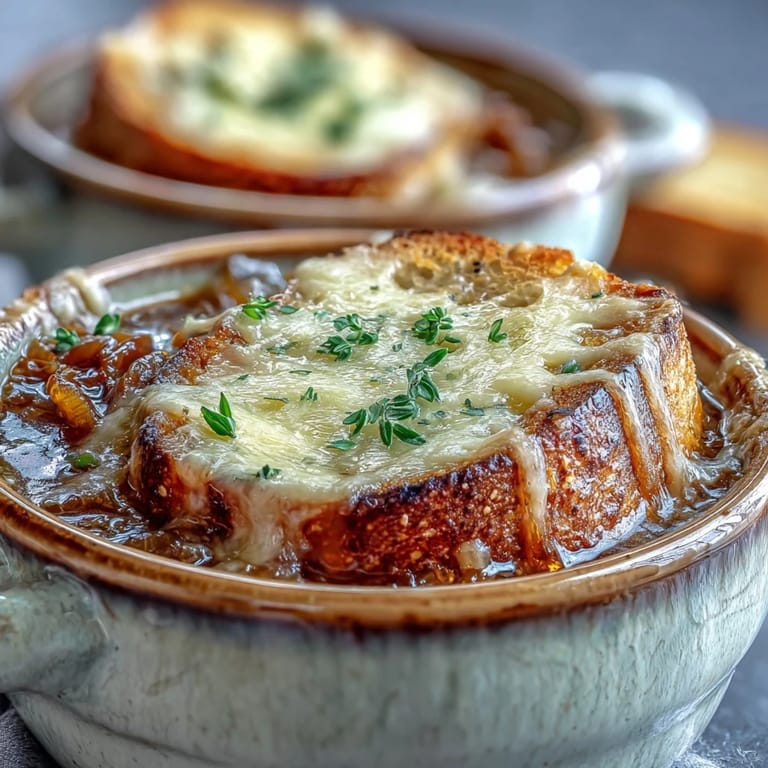
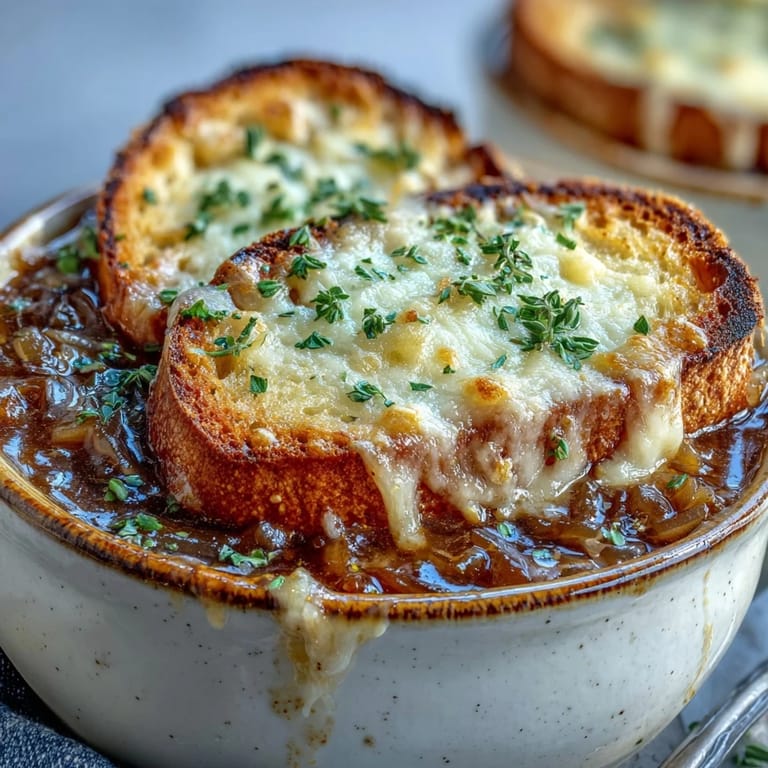
- Ladle the hot soup into oven-safe bowls, top each with a slice of toasted bread and a generous handful of Gruyère cheese. Place the bowls under the broiler for 2 to 3 minutes until the cheese is melted, bubbly, and starting to turn golden—watch it closely so nothing burns.
 Save to Pinterest
 There's a moment near the end of cooking when the kitchen smells so good that you have to open a window or you'll get lightheaded, and that's when you know the soup is ready. That smell is the soup telling you it's almost time to share it, and that's the best part of the whole process.
The Story Behind the Caramelization
Caramelization isn't actually browning; it's the Maillard reaction where the natural sugars in onions break down and create hundreds of new flavor compounds that taste nothing like fresh onions. The first time I understood this scientifically, I stopped treating the caramelization like a boring step and started treating it like watching an edible transformation happen right in front of me.
Substitutions and Flexibility
This soup is more forgiving than it looks—vegetable broth works beautifully if you're cooking for someone who doesn't eat meat, and honestly, sometimes the vegetarian version tastes lighter and lets the onions shine even more. Emmental or Swiss cheese can stand in for Gruyère without changing the essential character of the dish, and if you don't have white wine, you can skip it entirely or use a splash of sherry for something slightly different.
Make It Your Own at the Table
The beauty of serving this soup is that people can doctor it however they want—some rub their bread with a cut garlic clove before it goes into the bowl, others crack fresh pepper on top, and a few always add a tiny splash of red wine vinegar at the last second for brightness. These small choices make each person's bowl feel personal and intentional, which might be the real secret to why this soup has survived centuries without changing.
- Rub the toasted bread with a cut garlic clove if you want an extra savory punch.
- A splash of sherry vinegar or good red wine vinegar at the very end brightens everything.
- Fresh cracked pepper and a scatter of fresh thyme leaves on top look beautiful and taste even better.
 Save to Pinterest
 This soup is the kind of dish that reminds you cooking doesn't need to be complicated to be meaningful. Serve it with good bread, good company, and the satisfaction of knowing you made something that tastes like it took all day even though you were mostly just stirring.
Common Questions
- → How long does it take to properly caramelize the onions?
Proper caramelization takes 30-40 minutes over medium heat with frequent stirring. The onions should be deeply golden brown and sweet. Rushing this step will result in less flavor depth.
- → Can I make this soup vegetarian?
Yes, simply substitute vegetable broth for the beef broth. The caramelized onions provide rich flavor that works beautifully with vegetable stock.
- → What cheese can I use instead of Gruyère?
Emmental or Swiss cheese are excellent alternatives with similar melting properties and nutty flavor. Comté also works wonderfully for an authentic French option.
- → Do I need oven-safe bowls for this soup?
Yes, oven-safe bowls are essential for broiling the cheese topping. If you don't have them, you can toast the bread and cheese separately and place on top before serving.
- → Can I make this soup ahead of time?
Absolutely. The soup base can be made up to 3 days ahead and refrigerated. Reheat before adding the bread and cheese topping, then broil just before serving.
- → Why add sugar to the onions?
The sugar helps with caramelization and balances the natural acidity of the onions, creating a deeper, more complex flavor profile in the finished soup.