 Save to Pinterest
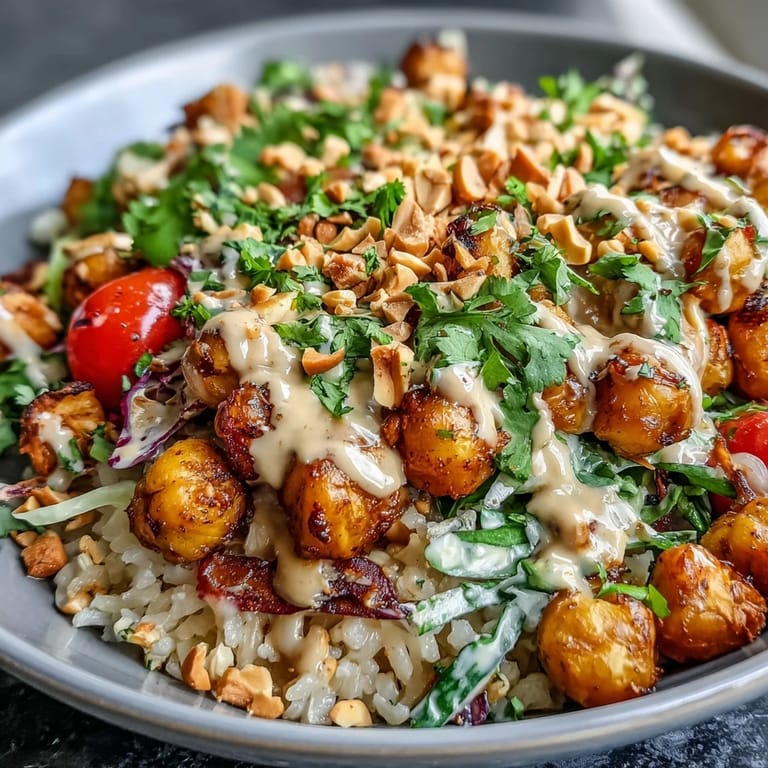
 Last spring, I was standing in my kitchen on a Tuesday afternoon, staring at three cans of chickpeas I'd bought with good intentions but never used. My roommate had just started talking about needing more protein in her meals, and I remembered watching someone crisp chickpeas in an oven until they turned golden and almost nutty. That afternoon became an experiment—I tossed those chickpeas with spices, roasted them, and made a peanut sauce from memory while chopping vegetables in a rhythm that felt meditative. What emerged was this bowl, and it's been my go-to ever since.
I made this for a friend who'd recently gone vegetarian and was worried about eating the same boring salads forever. When she took her first bite, her whole face lit up—the crispy chickpeas, the cool crunch of vegetables, that warm peanut sauce dripping through everything. She texted me the next day asking for the recipe, and I realized this bowl had become something I could give to people, not just eat alone at my desk.
Ingredients
- Chickpeas (2 cans, drained and rinsed): These are your protein anchor, and rinsing them matters more than you'd think—it removes the starchy liquid that would make them steam instead of crisp.
- Olive oil (1 tbsp): Just enough to coat without making them greasy; any more and they'll never get that satisfying crunch.
- Smoked paprika, cumin, garlic powder, salt and pepper: This spice blend does the heavy lifting, turning simple chickpeas into something you'd actually crave.
- Brown rice or quinoa (2 cups cooked): The base that holds everything together; quinoa adds a subtle nuttiness if you're feeling adventurous.
- Red cabbage (1 cup shredded): Its natural sweetness and vibrant color make this bowl feel alive, plus it stays crisp even if you dress it early.
- Carrots (1 cup julienned): I learned to cut them into matchsticks so they're delicate enough to mix through every bite without dominating the bowl.
- Cucumber, cherry tomatoes, edamame (1 cup each, prepared): Fresh vegetables that keep everything cool and prevent the bowl from feeling too heavy or warm.
- Fresh cilantro (1/4 cup chopped): The finishing herb that makes people ask what that bright flavor is, even if they usually skip cilantro.
- Creamy peanut butter (1/3 cup): Use the smooth kind here—chunky peanut butter won't emulsify into the sauce as cleanly.
- Soy sauce (2 tbsp, or tamari for gluten-free): The umami backbone that makes the sauce taste intentional and complex instead of one-note.
- Maple syrup or honey (1 tbsp): A touch of sweetness that balances the saltiness and heat, rounding out the whole sauce.
- Rice vinegar (1 tbsp): This specific vinegar is milder than white or apple cider, so it adds brightness without sharp edges.
- Sriracha or chili sauce (1 tsp, optional): I skip this most days, but when I add it, the whole bowl shifts—it's there if you want heat.
- Garlic (1 clove, minced): Fresh garlic in the sauce transforms it from good to unforgettable; jarred just doesn't have the same punch.
- Warm water (2–4 tbsp): Start with less and add gradually—you'll feel the sauce become pourable as it comes together.
- Roasted peanuts (2 tbsp chopped): A second peanut moment that adds texture and makes the bowl feel more finished.
- Lime wedges and sesame seeds (optional): The lime is essential, not optional—a squeeze brightens everything; sesame seeds are your choice for that nutty finish.
Tired of Takeout? 🥡
Get 10 meals you can make faster than delivery arrives. Seriously.
One email. No spam. Unsubscribe anytime.
Instructions
- Heat your oven and prep the pan:
- Set the oven to 425°F and line a baking sheet with parchment paper so your chickpeas won't stick and the cleanup is painless. While that preheats, you've got time to get your ingredients organized.
- Toss and roast the chickpeas:
- In a bowl, combine the drained chickpeas with olive oil, smoked paprika, cumin, garlic powder, salt, and pepper until they're evenly coated and glistening. Spread them single-layer on your sheet and roast for 20–25 minutes, shaking the pan halfway through so they crisp evenly all over—you'll know they're done when they smell almost nutty and feel hard when you press one.
- Build your sauce while they roast:
- Whisk together the peanut butter, soy sauce, maple syrup, rice vinegar, sriracha if using, minced garlic, and 2 tablespoons of warm water in a bowl. Keep whisking until you have a smooth, pourable consistency—if it's too thick, add water a teaspoon at a time until it flows like warm honey.
- Prepare your vegetables and grains:
- If your rice or quinoa isn't already cooked, start it now since it'll be done around the same time as your chickpeas. While that cooks, slice and prep all your vegetables on a cutting board, creating a little mise en place that makes assembly feel easy and joyful.
- Assemble with intention:
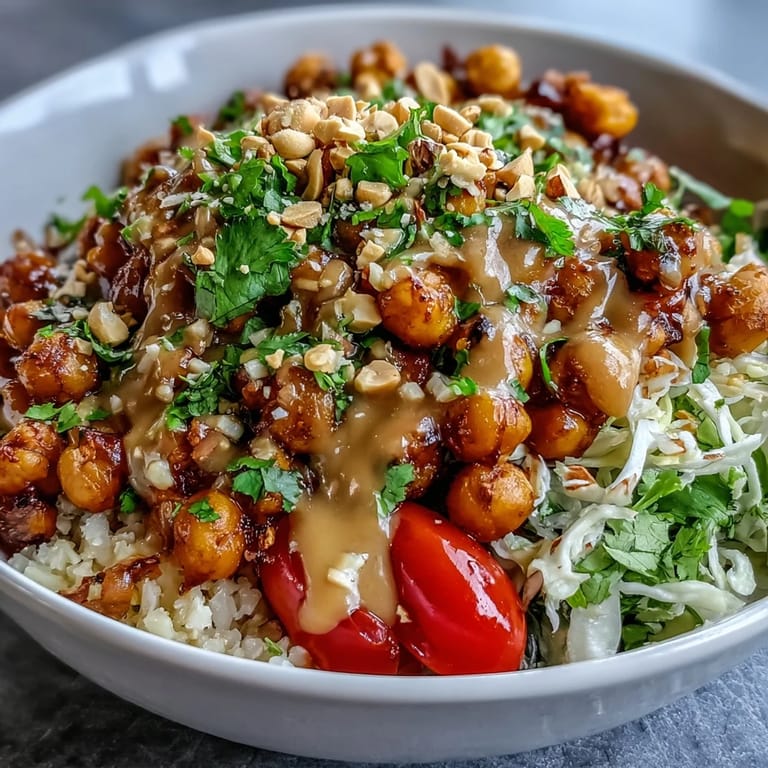
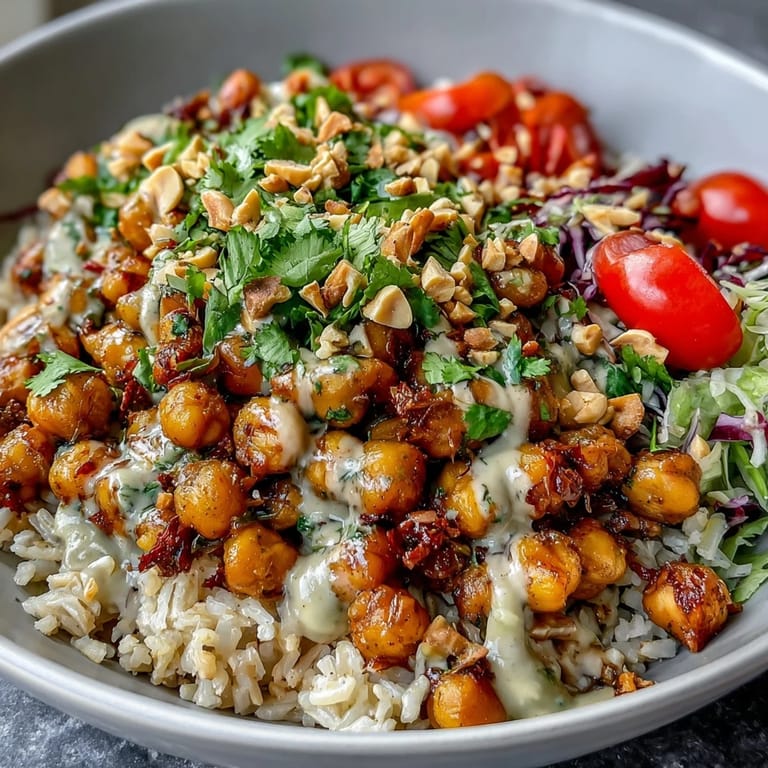
- Divide your cooked grain among four bowls as the base, then arrange the roasted chickpeas, shredded cabbage, julienned carrots, cucumber slices, tomato halves, edamame, and fresh cilantro on top in whatever pattern feels right. Drizzle generously with the peanut sauce, letting it pool in the center and soak into the grain.
- Finish and serve:
- Top each bowl with chopped roasted peanuts and sesame seeds if you're using them, then place a lime wedge on the side so people can squeeze it over just before eating. The lime is the final piece that ties everything together and makes each bite taste bright.
 Save to Pinterest
 What I love most about this bowl is how it taught me that vegetarian eating doesn't have to feel like a compromise. One of my friends who eats meat almost exclusively tried this and asked for seconds, which felt like validation in a way I didn't expect.
Why This Bowl Changed How I Cook
Before this, I thought protein had to be complicated. I'd overthink recipes, buy ingredients I'd never use again, and end up with something that tasted fine but felt like work. This bowl taught me that sometimes the best meals are the ones where you let the vegetables be themselves, season something crispy and satisfying, and tie it together with one really good sauce. Now I apply that philosophy to almost everything I make.
Ways to Make It Your Own
The beauty of this bowl is that it's flexible without losing its identity. I've added roasted broccoli when I had it, swapped the edamame for crispy tofu, and once made it with cauliflower rice instead of grains on a week when I was eating low-carb. My partner always adds extra sriracha and a handful of spinach, while my friend who introduced me to this way of eating adds avocado slices and swears by it. The core stays the same, but you can make it yours.
- For greens, stir in baby spinach or roughly chop some kale and add it raw—it wilts slightly from the warm sauce and adds earthiness.
- If you want more texture, add chopped roasted almonds or cashews instead of or alongside the peanuts.
- The leftover peanut sauce keeps for almost a week in the fridge, so make extra and drizzle it over roasted vegetables or rice bowls all week long.
Variations That Work Beautifully
I've experimented with different grains and vegetables depending on what's in season or on sale. In winter, I roasted root vegetables—parsnips and sweet potatoes cut small—and the bowl became warmer and more comforting. In summer, I've gone lighter with mostly raw vegetables and a smaller portion of grain, making it feel refreshing instead of filling. The peanut sauce works with all of it, which is partly why I keep coming back.
Making Ahead and Storage
I usually assemble these bowls fresh, but you can prepare almost everything in advance if you're meal prepping for the week. The roasted chickpeas stay crispy in an airtight container for three days, the vegetables can be cut and stored separately, and the sauce keeps perfectly in the fridge. The only thing I do right before eating is assemble everything so the vegetables stay crisp and the chickpeas don't get soft from sitting in sauce.
- Store the roasted chickpeas separately from the sauce and vegetables so they stay crunchy through the week.
- If you notice your sauce thickening in the fridge, whisk in a teaspoon or two of warm water when you're ready to use it.
- The lime wedge should always be fresh and squeezed right before you eat, never ahead of time.
 Save to Pinterest
 This bowl has become my answer to almost every cooking question I get asked, and I think that's because it proves that satisfying, nourishing food doesn't have to be complicated. Make it once and it becomes yours.
Common Questions
- → Can I make this bowl ahead of time?
Yes, you can prepare components in advance. Roast chickpeas and store up to 3 days. Keep vegetables chopped and sauce separate in the refrigerator. Assemble bowls just before serving to maintain crisp texture.
- → What can I use instead of peanut butter?
Almond butter, cashew butter, or sunflower seed butter work well as substitutes. Tahini creates a lighter, more Mediterranean flavor profile. Adjust sweetener slightly depending on your chosen alternative.
- → Is this bowl gluten-free?
Yes, simply use tamari instead of soy sauce in the peanut sauce. Ensure your other ingredients, particularly roasted peanuts and seasonings, are certified gluten-free. The bowl naturally pairs well with gluten-free grains like quinoa or rice.
- → How can I add more protein?
Increase chickpeas to 3 cans, add sliced hard-boiled eggs, include grilled tofu cubes, or top with shredded chicken if not vegetarian. Hemp seeds or pumpkin seeds also make excellent protein-rich garnishes.
- → Can I make the peanut sauce spicy?
Absolutely. Increase sriracha to 1-2 teaspoons or add sambal oelek for extra heat. A dash of cayenne pepper or red pepper flakes also works beautifully. Start small and adjust to your preferred spice level.
- → What vegetables work best in this bowl?
Shredded red cabbage, carrots, cucumber, and cherry tomatoes provide excellent crunch and color. You can also add bell peppers, radishes, snap peas, or shredded kale for variety. Aim for colorful, crisp vegetables that complement the creamy sauce.