 Save to Pinterest
 One Thursday, I was standing in my kitchen mentally exhausted from the week, staring at chicken breasts and wondering what could actually satisfy me without feeling like more work. My hand reached for peanut butter almost on impulse, and suddenly everything clicked—the nutty richness, the savory depth, the way it could tie together grains and vegetables into something that didn't need a recipe so much as a conversation. That bowl taught me that the best meals often come from ignoring the rulebook and following what your tired brain actually craves.
I made this for my sister when she was going through a period of really intense work deadlines, and she ate it straight from the bowl standing at my counter, not even sitting down. She came back the next week asking for the recipe because something about having all those textures and flavors in one place made her feel capable again. It's stayed that way for us—not fancy, but genuinely nourishing in a way that matters.
Ingredients
- Boneless, skinless chicken breasts or thighs (500 g): Thighs stay juicier if you're nervous about drying them out, but breasts work beautifully if you don't overbake them—that internal temperature check is your friend.
- Olive oil (1 tbsp): Just enough to help the spices cling and prevent sticking.
- Smoked paprika, garlic powder, cumin, salt, and black pepper: This combination builds a savory crust that makes the chicken taste like it's been marinating for hours.
- Brown rice or quinoa (200 g uncooked): Brown rice gives you earthiness and chew, while quinoa is lighter and slightly nuttier—pick based on your mood.
- Water or low-sodium broth (2 cups): Broth adds flavor, but water lets the other elements shine if that's what you're after.
- Fresh vegetables (carrot, red bell pepper, cucumber, purple cabbage, spring onions, baby spinach): The colors aren't just beautiful—they're each bringing different nutrients, textures, and a freshness that balances the warmth of the sauce.
- Creamy peanut butter (80 g): Don't use the natural kind with separated oil unless you're ready to stir it; regular creamy peanut butter is smoother and more forgiving here.
- Soy sauce, rice vinegar, honey, sriracha (optional): These four ingredients are the sauce's backbone—salty, tangy, sweet, and spicy in perfect proportion.
- Roasted peanuts, cilantro, lime wedges: The final touch that reminds you this isn't just sustenance, it's an actual meal worth enjoying.
Tired of Takeout? 🥡
Get 10 meals you can make faster than delivery arrives. Seriously.
One email. No spam. Unsubscribe anytime.
Instructions
- Set your oven and prep your space:
- Preheat to 200°C (400°F) and line a baking sheet with parchment paper so cleanup is almost nothing. This small step saves you so much frustration later.
- Season and coat the chicken:
- Toss your chicken in a bowl with the olive oil and all those warm spices until every piece is evenly covered. The paprika will give the chicken a deep amber color as it bakes.
- Bake until golden and cooked through:
- Arrange the chicken on your prepared sheet and bake for 20–25 minutes, checking with a meat thermometer until you hit 74°C (165°F) in the thickest part. Let it rest for 5 minutes before slicing—this keeps it tender instead of stringy.
- Cook your grains while the chicken bakes:
- Rinse your brown rice or quinoa under cold water, place it in a saucepan with water or broth, bring to a boil, then cover and reduce heat to low. Brown rice needs about 25 minutes, quinoa about 15—when the liquid is absorbed and you can fluff it with a fork, you're done.
- Prepare all your vegetables:
- Julienne or grate your carrot, slice the bell pepper and cucumber thin, shred the purple cabbage, slice the spring onions, and get your greens ready. Having everything cut and arranged before you assemble makes the actual bowl-building feel almost meditative.
- Whisk together the peanut sauce:
- Combine the peanut butter, soy sauce, rice vinegar, honey, and sriracha if you want heat in a small bowl. Whisk in warm water a tablespoon at a time until you have something that pours easily but still coats a spoon.
- Assemble your bowls:
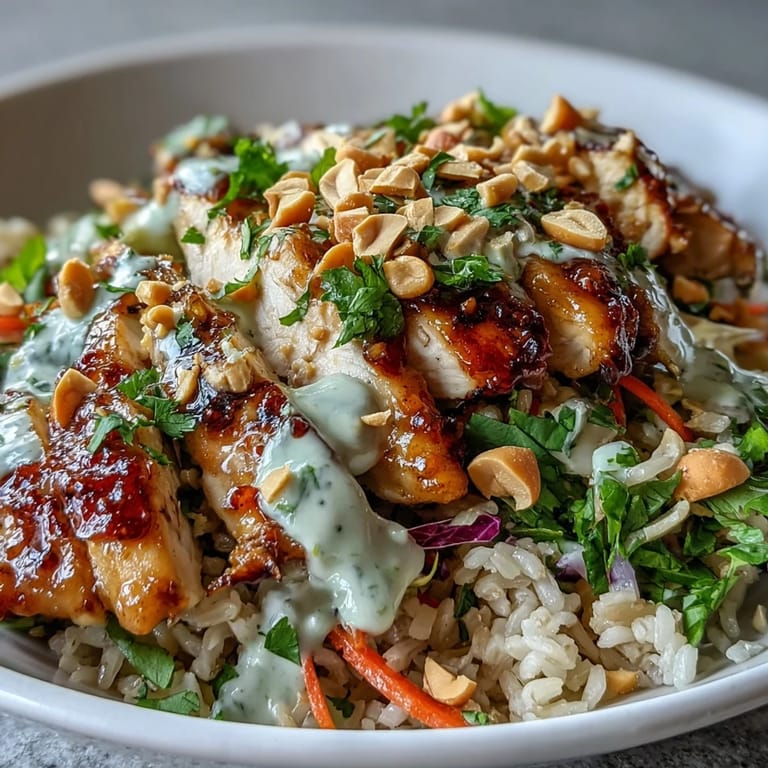
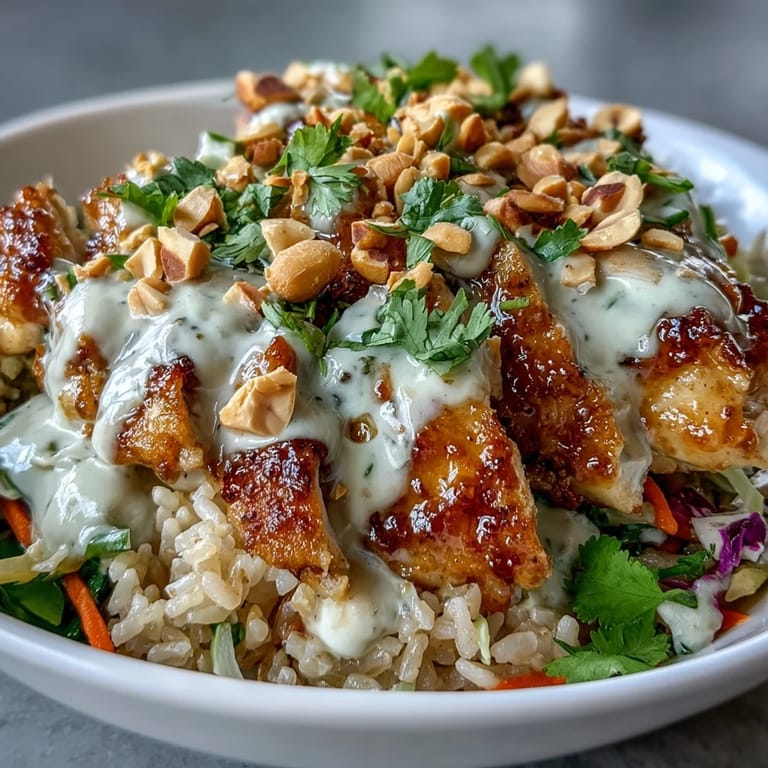
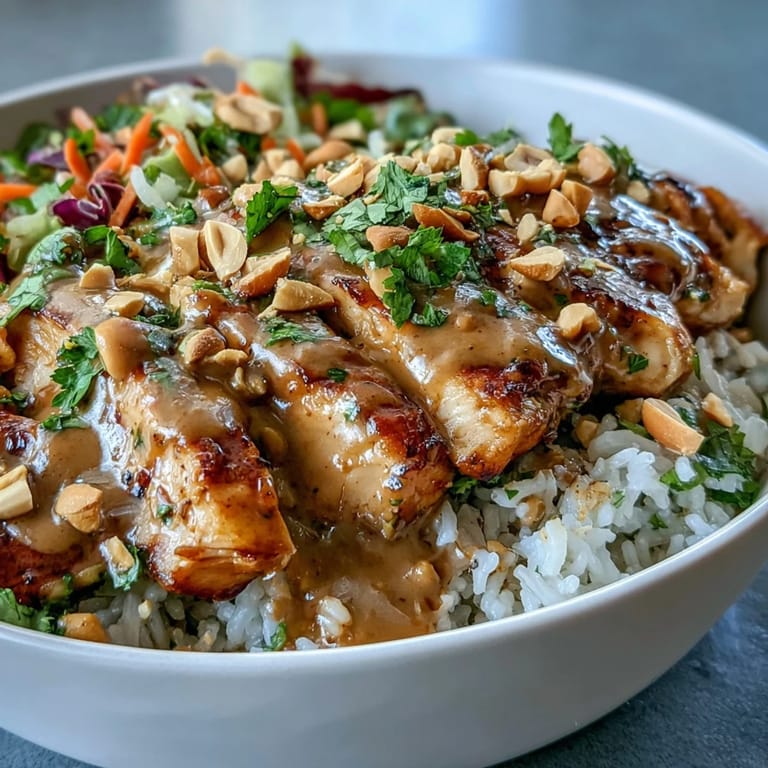
- Divide cooked grains among four bowls, then top each with sliced chicken, all those fresh vegetables, and a handful of greens. Drizzle generously with the peanut sauce—don't be shy, it's the whole point.
- Finish and serve immediately:
- Scatter chopped roasted peanuts and fresh cilantro over each bowl, add a lime wedge to squeeze over everything, and serve while the chicken and grains are still warm.
 Save to Pinterest
 My neighbor texted me a photo of her version of this bowl weeks after I mentioned it—she'd added roasted sweet potato and shredded beets, which I'd never have thought of. That's when I realized this isn't really a recipe so much as a blueprint for whatever your kitchen and your mood are telling you to make. The structure is just there to catch you when you're not sure what to do next.
Why This Bowl Works Every Time
The genius of this combination is that nothing fights for attention—the grains give you substance, the chicken gives you protein and satisfaction, the vegetables give you brightness and crunch, and the sauce ties everything together without being loud about it. It's balanced in a way that makes you feel good after eating it, not sluggish or guilty. Every element has a reason for being there, and when you taste it, you know immediately why.
Building Your Perfect Bowl
The order matters more than you'd think: grains at the bottom hold everything else, warm chicken goes next so it stays warm against the warm grain, then all your cold vegetables for contrast, greens for freshness, and finally the sauce that brings it all together. If you're eating it right away, you can even warm your bowl under hot water for thirty seconds so nothing cools down too fast. It's these small attentions that turn a quick meal into something you actually want to sit down for.
Making It Your Own
This bowl doesn't care about rigid rules—I've made it with tofu for vegetarian friends, added edamame for someone who wanted more protein, swapped the grains for farro when I had it on hand. The peanut sauce stays the anchor, reliable and familiar, while everything else can shift based on what you have and what you're craving. That flexibility is part of what keeps you coming back to it instead of letting the recipe disappear into a folder you never open again.
- Try roasted sweet potato or chickpeas if you want to make it fully vegetarian and keep the satisfaction level high.
- A drizzle of sriracha oil or hot honey on top adds a finishing touch that makes people ask what you did differently.
- Make extra sauce and keep it in the fridge for salads, wraps, or even as a dipping sauce for chips—it lasts about five days and only gets better.
 Save to Pinterest
 This bowl has become the meal I reach for when I want something real—something that fills you up without making you feel heavy, something you can make on a Tuesday and still want to eat. It's become the one I suggest when friends ask what to cook for people who matter to them.
Common Questions
- → Can I make this bowl vegetarian?
Absolutely. Substitute the chicken with baked tofu or tempeh using the same seasoning blend. Press and drain the tofu first for better texture, then bake for 25-30 minutes until golden and firm.
- → How long does the peanut sauce keep?
The peanut sauce stores beautifully in an airtight container in the refrigerator for up to one week. It may thicken when cold—simply whisk in a teaspoon of warm water to reach your desired consistency again.
- → What grains work best for this bowl?
Brown rice and quinoa are excellent choices, but farro, barley, or even cauliflower rice for a low-carb option work wonderfully. Just adjust cooking times according to package directions.
- → Can I prepare components in advance?
Yes. Cook the grains and chop vegetables up to 2 days ahead. The chicken can be seasoned and baked the day before—just reheat gently. Store everything separately and assemble when ready to serve.
- → Is the peanut sauce spicy?
The base sauce has mild heat from the sriracha, which is completely optional. Omit it for a child-friendly version, or increase the amount if you prefer more kick. The sauce is naturally balanced with honey and vinegar.
- → What other toppings can I add?
Sliced avocado, steamed edamame, roasted sweet potato cubes, shredded carrots, or mung bean sprouts all make excellent additions. The bowl is highly customizable based on what you have on hand.