 Save to Pinterest
 My neighbor invited me to help decorate her daughter's First Communion cake, and I'll never forget how her hands trembled as she placed that delicate fondant rose on top—not from nervousness about baking, but from the weight of the moment itself. That afternoon in her kitchen taught me that some cakes are more than dessert; they're edible prayers, little monuments to milestones that matter. The vanilla sponge beneath all that fondant beauty needed to be tender and forgiving, the buttercream smooth as silk, because this wasn't just about impressing guests. It was about getting it right for her.
I remember the kitchen light hitting the finished cake at exactly the right angle, and how everyone paused before cutting into it because it looked almost too pretty to eat. That's when you know you've succeeded—not when people compliment your technique, but when they hesitate, wanting to preserve the moment just a little longer. This cake creates those quiet, sacred pauses.
Ingredients
- All-purpose flour (2 ½ cups): Use high-quality flour and spoon it into your measuring cup rather than scooping directly from the bag, which compacts it and can make your cake dense.
- Baking powder (2 ½ tsp): This is what gives the cake its tender crumb, so don't skip it or reduce it, and make sure your baking powder hasn't been sitting open for months.
- Unsalted butter (1 cup for sponge, 1 ½ cups for frosting): Room temperature butter is non-negotiable—it creams better and creates a lighter, airier crumb than cold butter.
- Granulated sugar (2 cups): The sweetness should be bright but balanced by the vanilla, not cloying.
- Large eggs (4), room temperature: Cold eggs won't incorporate properly and can cause the batter to break; set them out an hour before baking.
- Pure vanilla extract (1 tbsp for sponge, 2 tsp for frosting): Use real vanilla, not imitation—the flavor difference matters when vanilla is your main note.
- Whole milk (1 cup), room temperature: This keeps the cake moist and tender; cold milk can cause the batter to seize up.
- Powdered sugar (5 cups), sifted: Sifting removes lumps that would create a grainy, unpleasant frosting texture.
- White fondant (16 oz): Buy quality fondant or make your own; cheap fondant can taste waxy and be harder to work with.
- Edible pearls or silver dragees (optional): These catch the light and add that sophisticated touch without overwhelming the delicate design.
- Cross cake topper: Look for one that matches your vision—ceramic, plastic, or even edible fondant versions all work beautifully.
Tired of Takeout? 🥡
Get 10 meals you can make faster than delivery arrives. Seriously.
One email. No spam. Unsubscribe anytime.
Instructions
- Prepare your pans and preheat:
- Set your oven to 350°F and grease two 8-inch round pans with butter, then line the bottoms with parchment paper—this ensures your layers release cleanly and come out level. Having everything ready before you start mixing keeps you calm and prevents the batter from sitting too long before baking.
- Combine your dry ingredients:
- Whisk flour, baking powder, and salt together in a medium bowl, making sure everything is evenly distributed so your cake rises evenly. This step takes 30 seconds but prevents lumps that could ruin your tender crumb.
- Cream butter and sugar until fluffy:
- Beat softened butter and sugar together for a full 3 minutes until it looks pale, thick, and almost mousse-like; this incorporates air that helps the cake rise. Listen to the mixer change pitch—that's how you know you've beaten enough.
- Add eggs one at a time:
- After each egg, beat well before adding the next, which helps them emulsify into the butter mixture rather than sitting as separate little pools. It feels slow, but rushing this step can cause your cake to have a dense, gritty texture.
- Mix in vanilla and alternate wet and dry:
- Starting and ending with the flour mixture helps keep everything from breaking or becoming too thin, so add flour, then milk, then flour, and so on. Mix on low speed and stop as soon as everything just comes together—overmixing develops gluten and makes the cake tough.
- Fill and bake:
- Divide the batter evenly between your prepared pans (a kitchen scale helps here) and smooth the tops so they bake evenly. Bake for 30 to 35 minutes until a toothpick inserted in the center comes out clean, then cool in the pans for 10 minutes before turning out onto wire racks.
- Make your buttercream:
- Beat softened butter until creamy, gradually add sifted powdered sugar a cup at a time to avoid lumps, then add vanilla and salt. Add milk or heavy cream one tablespoon at a time until you reach spreading consistency—too stiff and it tears the cake, too soft and it won't hold the fondant.
- Level and crumb coat:
- If your cake layers have domed on top, trim them level with a serrated knife; place the first layer on your cake board, spread with buttercream, and top with the second layer. Apply a thin crumb coat (which seals loose crumbs), chill for 20 minutes, then apply your final smooth layer of frosting.
- Craft your fondant roses:
- Roll white fondant to 1/8-inch thickness, cut small circles, flatten each one, then overlap them as you roll them gently around a center ball to form a rose. Tint a small portion of fondant green for leaves, or leave them white for a pure, ethereal look.
- Decorate with intention:
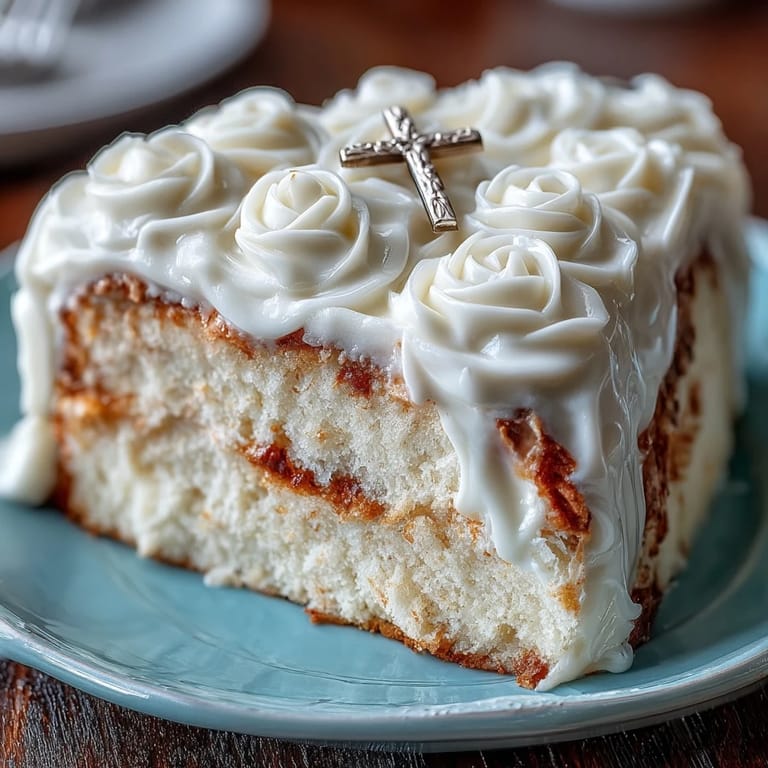
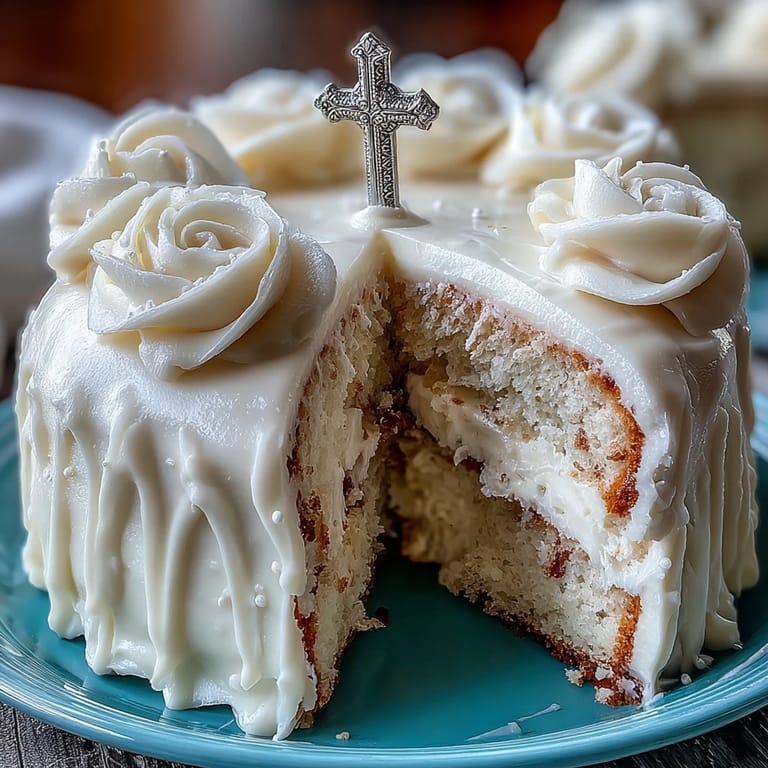
- Arrange your fondant roses and leaves on the cake, add edible pearls or dragees if desired, and place the cross topper at the center. Step back and look at it from different angles—this is your moment to create something sacred.
- Chill and serve:
- Keep the finished cake chilled until serving time, which helps the fondant set and keeps everything looking pristine. Let it sit at room temperature for 15 minutes before cutting so the cake is tender and the frosting cuts cleanly.
 Save to Pinterest
 What struck me most wasn't the technical skill or the perfect layers—it was how the act of making this cake transformed the baker into someone thoughtful and careful, as if the cake itself demanded reverence. That's a gift worth baking for.
The Science of a Tender Crumb
The vanilla sponge works because of balance—enough structure from the flour and eggs to hold the cake up, but enough fat and liquid to keep it tender. The milk acts as both moisture and a tenderizer, which is why substituting it with water leaves you with a drier cake. When you cream the butter and sugar properly, you're literally whipping air into it, and those tiny air bubbles expand during baking and help the cake rise gently and evenly, rather than cracking or sinking in the middle.
Working with Fondant Without Frustration
Fondant has a reputation for being finicky, but it's really just thick sugar dough that responds to warmth and patience. If it cracks while you're rolling, your kitchen might be too cold—just work it in your hands for a moment to warm it up. Powdered sugar is your friend for dusting your work surface, but use it sparingly or it will absorb into the fondant and make it grainy. The roses don't need to be perfect; slight imperfections make them look more organic and beautiful, like real roses would be.
Making This Cake Your Own
The beauty of this recipe is how forgiving the foundation is, which gives you space to personalize the decoration. Some bakers add lemon zest to the sponge for subtle brightness, others use almond extract instead of vanilla for a more delicate flavor. You could make roses in soft pink or lavender, use edible glitter instead of pearls, or hand-paint details onto the fondant if you're feeling artistic. This cake is a canvas, and the vanilla sponge is just sturdy enough to hold whatever vision you have.
- For a lighter cake, substitute half the butter in the sponge with neutral oil like canola or vegetable oil.
- If you need it gluten-free, use a 1:1 gluten-free flour blend and your cake will taste nearly identical.
- Make the cake layers a day ahead and refrigerate them wrapped in plastic—they'll be easier to frost and actually taste better as the flavors settle.
 Save to Pinterest
 This cake is made for moments that matter, and once you've baked it, you'll understand why people trust cakes with their most precious celebrations. That's a responsibility and a privilege worth getting right.
Common Questions
- → How do I ensure a moist vanilla sponge?
Use room temperature eggs and milk, cream the butter and sugar thoroughly, and avoid overmixing once flour is added to maintain a tender crumb.
- → What is the best way to create fondant roses?
Roll small fondant balls, flatten them gently, and shape them into petals. Assemble petals around a core to form a realistic rose shape.
- → Can I prepare the buttercream in advance?
Yes, buttercream can be made ahead and stored in an airtight container in the refrigerator. Bring it to room temperature before spreading.
- → How should I assemble and decorate the cake?
Level the cooled sponge layers, spread a smooth layer of buttercream between each, apply a thin crumb coat, chill, then finish with a smooth final layer. Decorate with fondant roses and place the cross topper carefully on top.
- → Are there options for dietary adjustments?
Substitute half of the butter in the sponge with vegetable oil for a lighter texture, or use gluten-free flour blends to accommodate dietary needs.