 Save to Pinterest
 The first time I made dandelion jelly, the kitchen was filled with a sunny aroma that surprised me more than I expected. I had just come in from the backyard, fingertips stained yellow and a basket overflowing with blossoms picked in the crisp morning air. My curiosity was piqued by the thought of capturing spring in a jar, and the gentle hum of bees outside encouraged me to keep picking. Watching petals swirl into boiling water felt oddly soothing, the process unfolding in rhythm with my heartbeat. It was one of those quiet days where the recipe felt less like work and more like an adventure in simple pleasures.
Sharing this jelly with my neighbor became a small ritual; we’d spread it on warm toast and laugh about how we never used to notice dandelions before. Good-natured teasing about my foraging adventures was always followed by another helping, and a little jar made its way to her kitchen nearly every spring. There’s something satisfying about offering a preserve that starts with a walk in the garden, especially when the conversation turns to taste memories and the sweetness of little surprises.
Ingredients
- Fresh dandelion petals: Picking only the yellow parts is key or you’ll end up with bitterness; I learned to set up a little assembly line and enlist help when prepping.
- Water: Its role is to gently coax the color and flavor out of the petals—you may need to top it off for just the right amount in the end.
- Fresh lemon juice: Just-squeezed juice adds a tart brightness and helps with setting the jelly—make sure there’s no stray seeds.
- Granulated sugar: Pocketed ladles of sweetness that give structure and clarity to the finished jelly; using fine sugar prevents stubborn crystals.
- Mild honey: The floral notes make everything sing; I choose a light, non-bitter honey so the dandelions don’t get overshadowed.
- Fruit pectin: My go-to for reliable set; mixing well avoids clumping and ensures a good gel rather than disappointing syrup.
Tired of Takeout? 🥡
Get 10 meals you can make faster than delivery arrives. Seriously.
One email. No spam. Unsubscribe anytime.
Instructions
- Petal Prep:
- Pluck every petal carefully, keeping only the yellow strands—if you squeeze them, you’ll notice the green parts smell a little sharp, so discard those. It’s messy but worth it; gather them in a big bowl and check for stray bugs.
- Making the Infusion:
- Tumble petals into a saucepan and pour in the water, then watch as the color turns golden. Bring to a gentle boil, then lower the heat and let it simmer quietly for 10 minutes.
- Steeping for Flavor:
- Cover the pot and let it sit; leaving it overnight on the counter makes the kitchen smell sweet the next morning. The waiting is part of what gives it depth.
- Straining the Liquid:
- Pour everything through a cheesecloth or sieve, pressing the petals for every last drop. Don’t rush—this step defines the clarity of your jelly.
- Adjusting the Infusion Amount:
- Measure out exactly three cups—even the best forager sometimes needs to add a splash of water to reach the right level. The extra liquid won’t dull the flavor if you steeped well.
- Adding Lemon and Pectin:
- Return the strained infusion to the pan, stir in lemon juice and pectin, and bring to a lively boil as you mix. It should bubble brightly and smell citrusy.
- Sugar and Honey Time:
- Pour in sugar and honey together, stirring until everything dissolves, then ramp up the heat to a rolling boil. Watch closely—if it climbs fast, keep stirring to avoid burning.
- Boil for the Jelly Test:
- Keep it boiling for about two minutes; you’ll notice the mixture thickening. To check the set, try the jelly test with a cold plate—if it wrinkles, you’re golden.
- Skimming and Filling Jars:
- Remove from heat, skim away any foam, and ladle into sterilized jars, leaving a little space at the top. Wipe rim clean, secure the lids, and process in boiling water for five minutes.
- Cooling and Storing:
- Let jars cool undisturbed—don’t touch, no matter how tempted you are. Wait for the seal to pop, and then stash them somewhere cool and dark.
 Save to Pinterest
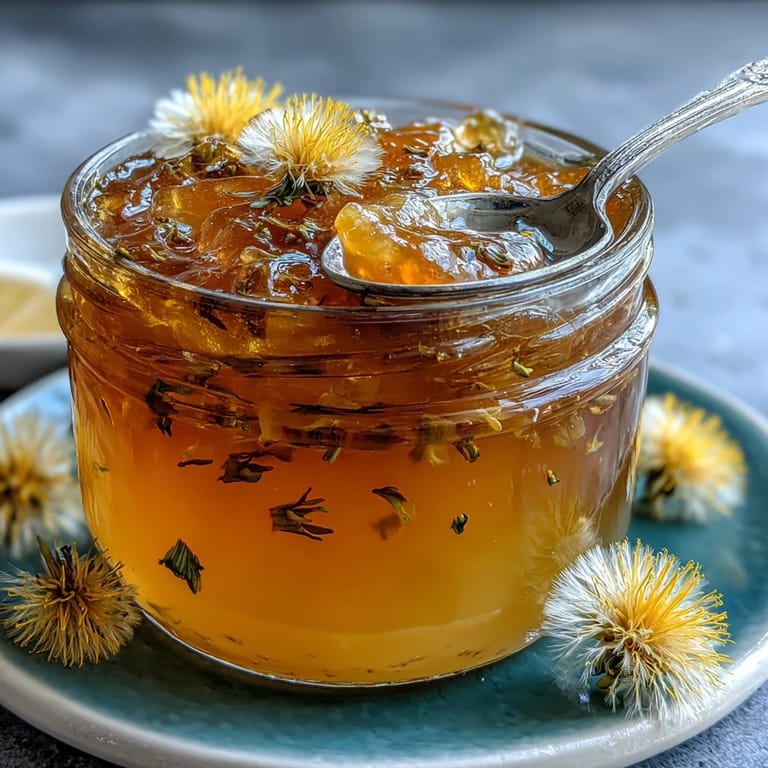
 Watching a friend marvel at the jelly’s golden color reminded me that cooking can feel like a small celebration. Even the simplest preserve has a way of bringing people together, passing spoons around the table and laughing at how floral flavors surprise the palate.
Perfect Pairings for Dandelion Jelly
I love this jelly drizzled over Greek yogurt, where the tang plays off the sweetness, or smeared on sourdough bread slathered with butter. The subtle floral finish pairs especially well with soft cheeses—goat cheese or brie are favorites in our house, and even roasted chicken finds a new note with a glaze of jelly.
Springtime Foraging Tips
Check every dandelion you pick for neighbors or stray debris; spring mornings are ideal because blossoms open fully. Only harvest where you know the land is untreated—and don’t forget to leave some for the pollinators. A gentle shake knocks off ants, and plucking petals in batches saves sanity and time.
Troubleshooting and Last-Minute Advice
Don’t panic if your jelly looks a little thin while hot—it firms up as it cools, so resist the urge to overcook. Clean utensils matter most when canning; stray crumbs or drops from other recipes can ruin the seal. Double-check the jelly test so you avoid heartbreak when opening a jar weeks later.
- Keep a damp cloth nearby for sticky fingers and quick cleanups.
- If you miss a step, breathe—it’s usually salvageable.
- Always label and date your jars so every batch tells its own story.
 Save to Pinterest
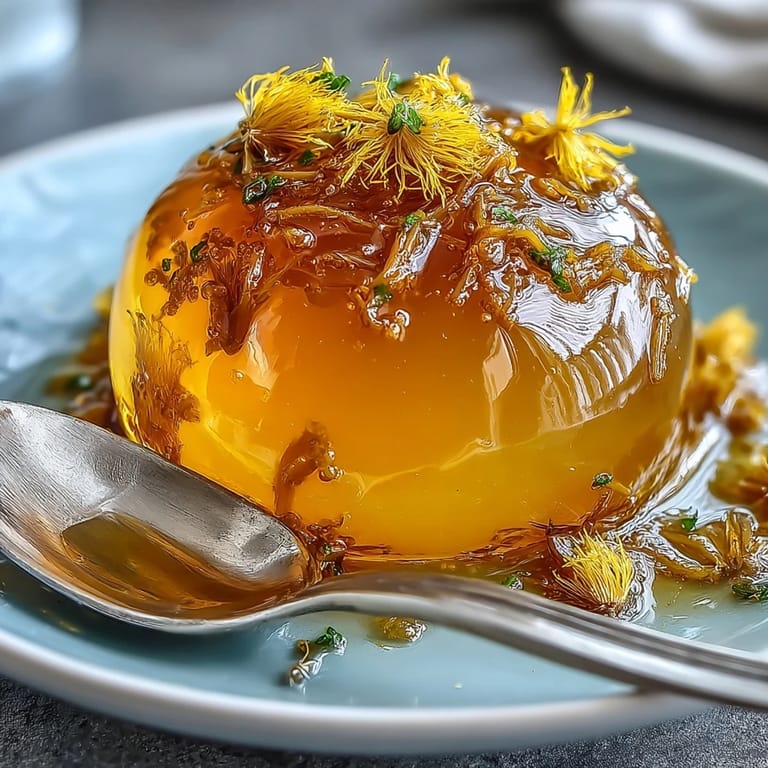
 Letting the sunlight catch the jar and seeing its golden shimmer always makes me smile. However you share it, dandelion jelly turns ordinary moments into little celebrations.
Common Questions
- → Can I use dried dandelion petals instead of fresh?
Fresh petals yield the best color and flavor, but dried petals can be used if rehydrated first. Adjust amounts as needed.
- → How should I harvest dandelions safely?
Pick blossoms from untreated, pesticide-free areas. Only use the yellow petals, removing all green parts for optimal taste.
- → Is there a vegan option?
Replace honey with sugar or agave syrup for a vegan-friendly version without affecting consistency.
- → How will I know if the jelly has set?
The jelly test involves placing a spoonful on a chilled plate; if it wrinkles when pushed, it's ready for jarring.
- → What is the best way to serve this jelly?
Try spreading it over toast, pairing with soft cheeses, or using as a sweet glaze for roasted meats and vegetables.
- → Can this preserve be made without pectin?
It is possible, but setting may be less reliable. You might need to cook longer and test for consistency frequently.