 Save to Pinterest
 The kitchen was freezing that January, the old radiators clicking but barely putting up a fight. I'd been craving something that felt like a warm hug, and chicken and dumplings kept popping into my head. My grandmother never wrote down her recipe, but I remembered watching her drop those doughy clouds into bubbling broth, never measuring a thing. That day, I decided it was time to recreate that magic from memory and instinct.
My roommate walked in while the stew was simmering, the smell of thyme and onions filling every corner of our tiny apartment. She stood in the doorway for a full minute before asking what I was making, and I knew right then this was going to become a regular request. We ate it standing up at the counter, too impatient to wait for the table to be cleared.
Ingredients
- 2 lbs boneless skinless chicken thighs or breasts: Thighs stay more tender during long simmering, but both work beautifully cut into generous chunks
- 2 tbsp unsalted butter and 1 tbsp olive oil: The butter adds richness while oil prevents burning, this combination creates the perfect fond for flavor building
- 1 large onion, 3 medium carrots, and 2 celery stalks: This classic trio forms the aromatic backbone, take your time here because proper sautéing makes all the difference
- 3 cloves garlic: Minced fresh and added after the vegetables soften, you want it fragrant not bitter
- 1/4 cup all-purpose flour: This creates the velvety thickened base, sprinkling it over vegetables prevents clumping better than adding it to liquid
- 6 cups low-sodium chicken broth: Low sodium lets you control the seasoning, homemade broth is wonderful but a good quality store bought works perfectly
- 1 cup whole milk or heavy cream: Cream creates luxurious results but whole milk keeps it lighter while still wonderfully silky
- 1 tsp dried thyme and 1 bay leaf: These herbs complement chicken without overpowering it, remove the bay leaf before serving
- 1 cup frozen peas: Added late so they stay bright and sweet, fresh peas work too if you can find them
- 2 cups all-purpose flour for dumplings: The structure for those fluffy clouds, all purpose gives the best balance of tender and sturdy
- 1 tbsp baking powder: This is what makes dumplings puff up beautifully, check that yours is fresh for the best rise
- 2 tbsp melted butter and 3/4 cup milk: Added to the dry ingredients for dumplings, melted butter distributes more evenly than cold
Tired of Takeout? 🥡
Get 10 meals you can make faster than delivery arrives. Seriously.
One email. No spam. Unsubscribe anytime.
Instructions
- Build the aromatic foundation:
- Heat butter and olive oil in your largest Dutch oven over medium heat, then add onion, carrots, and celery, letting them soften for about 5 minutes until they're fragrant and starting to turn translucent
- Add the garlic:
- Stir in the minced garlic and cook for just one minute until you can smell it, any longer and it might turn bitter
- Create the roux:
- Sprinkle the flour over the vegetables while stirring constantly, coating everything evenly and cooking for 2 minutes to remove that raw flour taste
- Add the liquids gradually:
- Pour in the chicken broth slowly while stirring, this prevents lumps from forming and helps the flour thicken the liquid beautifully
- Simmer the chicken:
- Add the chicken pieces with thyme, bay leaf, salt, and pepper, bring everything to a boil then cover and simmer gently for 20 minutes until the chicken is tender
- Finish the stew base:
- Remove the bay leaf, stir in the milk or cream with peas and parsley, then let it simmer uncovered while you make the dumplings
- Mix the dumpling dough:
- Whisk together the flour, baking powder, and salt in a bowl, then stir in melted butter and milk just until combined, some lumps are fine and overmixing makes tough dumplings
- Drop the dumplings:
- Use about 2 tablespoons of dough for each dumpling, dropping them onto the simmering stew surface and spacing them apart so they have room to puff up
- Steam them perfectly:
- Cover the pot tightly and resist lifting the lid, simmer for 15 minutes until the dumplings are puffed and cooked through
- Season and serve:
- Taste and adjust salt and pepper if needed, then ladle the stew and dumplings into bowls, garnishing with extra parsley for a fresh finish
 Save to Pinterest
 This recipe became my go-to during my first year of teaching, when evenings were exhausting and I needed something that felt like home. There was something meditative about stirring that pot, watching the dumplings puff up through the steam clouded glass. It turned lonely weeknights into small celebrations.
Making It Your Own
I've learned that a splash of dry white wine added with the broth adds incredible depth, though it's absolutely delicious without it. Sometimes I'll throw in a handful of fresh spinach right at the end for some extra greens, wilting it into the hot stew just before serving.
Timing Makes Perfect
The dumplings only need about 15 minutes to cook through, but give them that full time without peeking. I've made the mistake of checking too early and watched them collapse, turning into dense little dough balls that are still tasty but not quite the same experience.
Serving Suggestions
A crisp green salad with a vinaigrette cuts through the richness beautifully, and crusty bread is never a bad idea for soaking up every last drop. Some nights I just serve it with nothing else, letting it be the complete comfort meal it was meant to be.
- Leftovers reheat surprisingly well, though the dumplings will absorb more broth overnight
- The stew base freezes perfectly if you want to make dumplings fresh later
- A glass of Sauvignon Blanc pairs beautifully if you're serving this for company
 Save to Pinterest
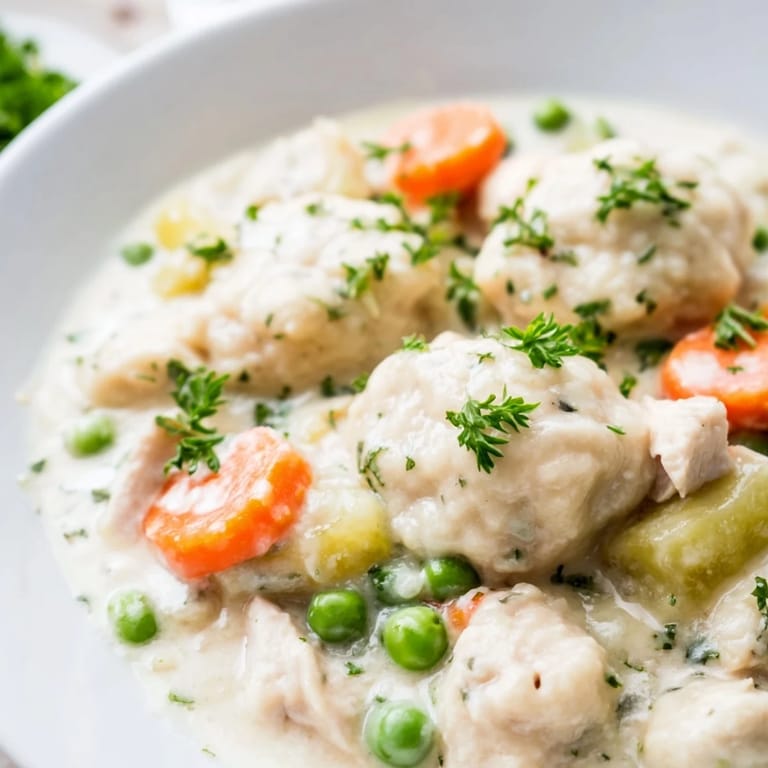
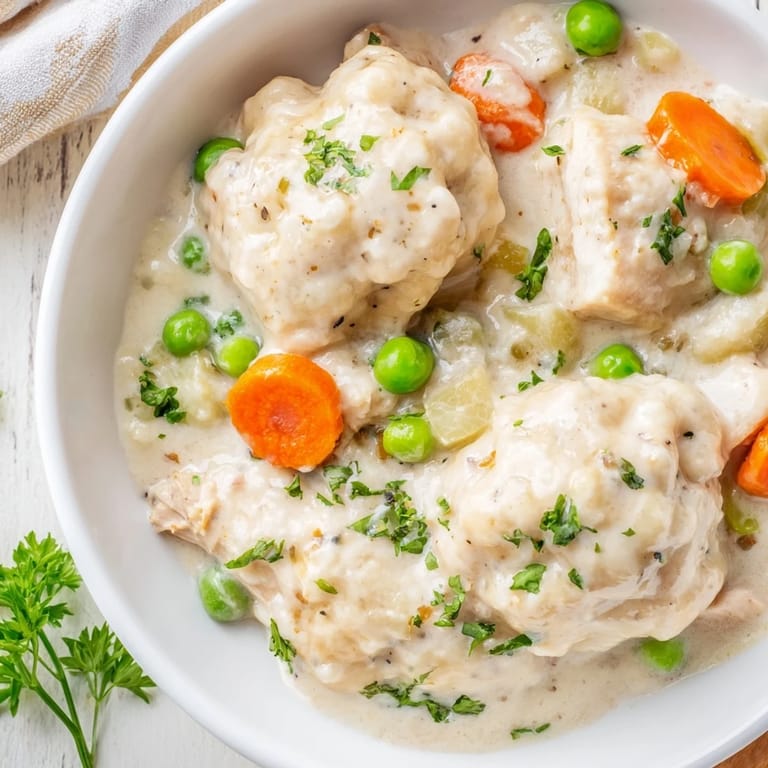
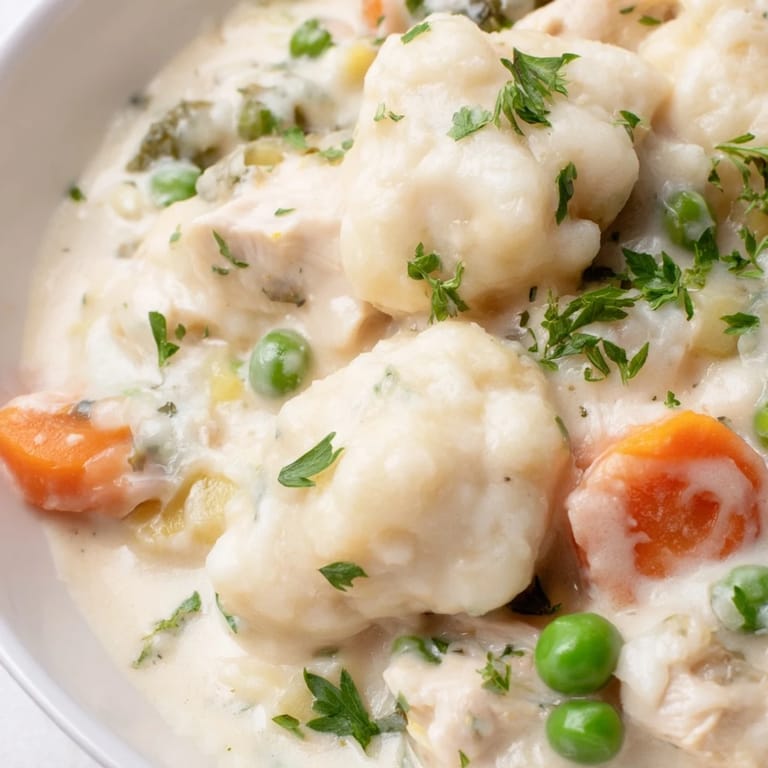
 There's nothing quite like lifting that lid and seeing those puffed golden dumplings floating in a sea of creamy broth. It's humble food that feels special every single time.
Common Questions
- → How do I know when the dumplings are cooked through?
The dumplings are done when they've doubled in size and feel firm to the touch, usually after 15 minutes of covered simmering. Insert a toothpick into the center—it should come out clean without any wet dough clinging to it.
- → Can I use leftover cooked chicken?
Absolutely. If using cooked chicken, skip the initial 20-minute simmer time and add it during step 6 when you incorporate the peas and cream. This prevents the meat from becoming dry or tough.
- → Why is my dumpling dough too sticky or dry?
The humidity and flour brand can affect dough consistency. If too sticky, add flour one tablespoon at a time. If too dry, add milk a teaspoon at a time. Remember, a slightly sticky dough yields lighter dumplings—don't overwork it.
- → Can I make this ahead of time?
Prepare the stew base up to 2 days in advance and refrigerate. When ready to serve, reheat gently and make fresh dumplings to drop in. Previously cooked dumplings can become gummy when reheated.
- → What can I substitute for the milk or cream?
Buttermilk adds tanginess, while coconut milk creates a dairy-free version with subtle sweetness. For a lighter option, use evaporated milk or half-and-half. Each alternative slightly alters the final richness.
- → How do I prevent lumps when adding the flour?
Sprinkle the flour gradually while constantly stirring the vegetables. This coats them evenly and allows the flour to cook out its raw taste before liquid is added. Whisking the broth as you pour it also helps achieve smoothness.