 Save to Pinterest
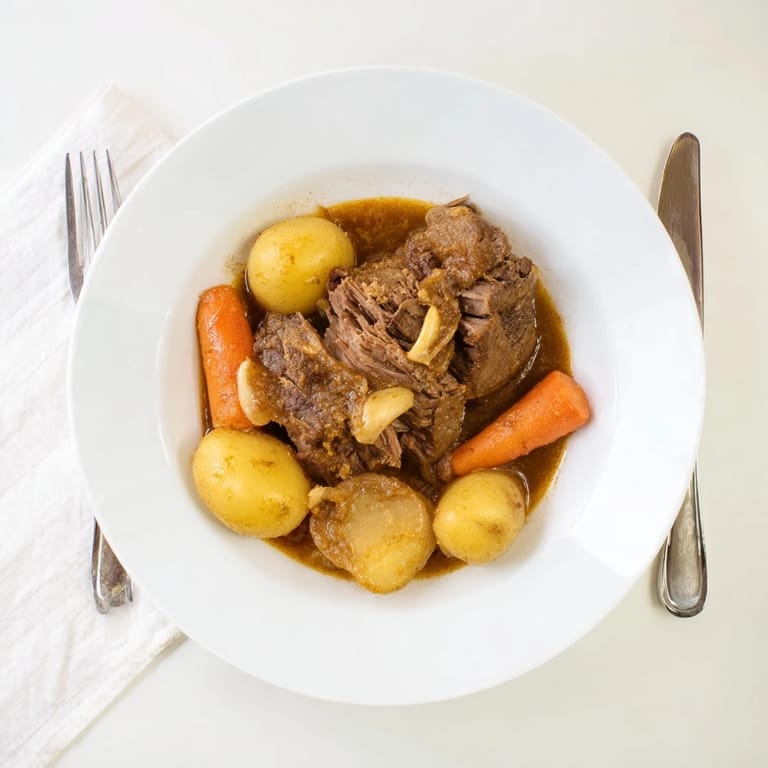
 The kitchen smelled like red wine and browning beef on a gray Sunday when my nephew asked what I was making. I told him pot roast, and he looked skeptical until the first whiff of thyme and onions hit him three hours later. Now he texts me every time he sees chuck roast on sale. Thats the thing about this dish, it wins people over slowly and completely.
I learned this recipe the hard way, rushing through the searing step because I was running late for a dinner party. The gravy was thin and the beef lacked that deep, caramelized flavor that makes pot roast sing. Now I treat the browning like a meditation, letting each side develop a proper crust before moving on.
Ingredients
- 1 (3–4 lb / 1.4–1.8 kg) chuck roast: Chuck has enough marbling to stay tender through hours of cooking, and it absorbs all those savory flavors beautifully
- 2 teaspoons kosher salt: Season generously before searing, it creates a flavorful crust and penetrates the meat as it braises
- 1 teaspoon black pepper: Freshly cracked gives you those little bursts of heat throughout
- 2 tablespoons olive oil: You need a neutral oil with a high smoke point for proper searing
- 1½ lbs (680 g) Yukon Gold or Russet potatoes: Yukon Golds hold their shape better, but Russets will give you creamier bites
- 4 large carrots: Cut into substantial chunks so they dont dissolve into the gravy
- 2 large yellow onions: Quartered onions become sweet and translucent after hours in the oven
- 4 cloves garlic: Smashed garlic mellows into the sauce, providing subtle depth without overpowering
- 2 cups (480 ml) beef broth: Use a good quality broth, it becomes the backbone of your gravy
- 1 cup (240 ml) dry red wine: Something drinkable, it adds acidity and complexity to balance the rich beef
- 2 tablespoons tomato paste: This concentrates the flavors and gives the gravy its deep color
- 1 tablespoon Worcestershire sauce: Umami in a bottle, it makes everything taste more beefy
- 2 teaspoons dried thyme or 4 fresh thyme sprigs: Earthy and aromatic, it complements beef perfectly
- 2 bay leaves: They release subtle herbal notes as they simmer
- 2 tablespoons all-purpose flour or cornstarch: For thickening the gravy into something velvety and spoon-worthy
- 2 tablespoons cold water: Essential for creating a smooth slurry without lumps
Tired of Takeout? 🥡
Get 10 meals you can make faster than delivery arrives. Seriously.
One email. No spam. Unsubscribe anytime.
Instructions
- Preheat and prepare:
- Set your oven to 300°F (150°C) and pat the beef thoroughly dry with paper towels. Season generously on all sides with salt and pepper.
- Sear the roast:
- Heat olive oil in a large Dutch oven over medium-high heat. Sear the roast for 4–5 minutes per side until deeply browned. Remove to a plate.
- Build the base:
- Add onions and garlic to the pot, sautéing 2–3 minutes until fragrant. Stir in tomato paste and cook for 1 minute. Deglaze with red wine, scraping up all the browned bits from the bottom.
- Add liquids and herbs:
- Return the roast to the pot and pour in beef broth, Worcestershire sauce, thyme, and bay leaves. Arrange potatoes and carrots around the beef.
- Braise low and slow:
- Cover the pot and transfer to the oven. Braise for 3–3½ hours until beef is fork-tender and vegetables are cooked through.
- Make the gravy:
- Remove beef and vegetables to a platter. Skim excess fat from the liquid. Whisk flour with cold water until smooth, stir into the pot, and simmer over medium heat for 3–5 minutes until thickened.
- Serve it up:
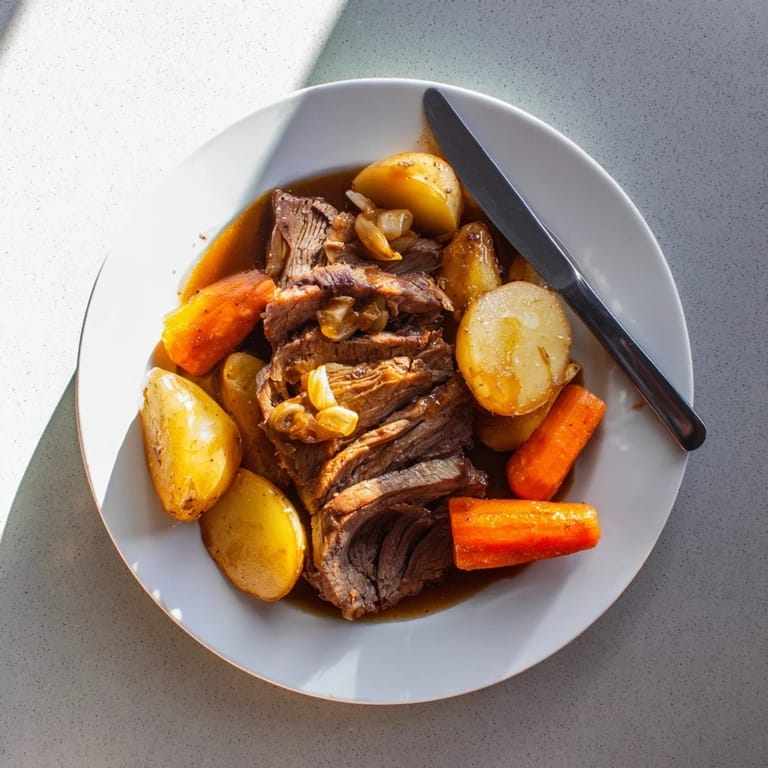
- Slice the beef against the grain and arrange with vegetables. Drizzle generously with gravy and serve while still steaming.
 Save to Pinterest
 My grandmother used to say pot roast was Sunday supper because it demanded patience and rewarded it with something that felt like a hug from the inside out. The first time I served it to my own family, my husband took one bite and went completely silent for five minutes straight.
Choosing the Right Cut
Chuck roast is the gold standard here because it has enough connective tissue to break down into gelatin during braising. That gelatin is what makes the meat feel silky and luxurious. Leaner cuts like round will dry out and disappoint you every time.
Wine Selection Matters
Use a red wine you would actually drink, because cooking concentrates its flavors. Cabernet Sauvignon, Merlot, or Pinot Noir all work beautifully. If you do not cook with alcohol, additional beef broth makes a perfectly fine substitute.
Make It Ahead
Pot roast actually tastes better the next day when the flavors have had time to marry and deepen. Reheat it gently in the gravy over low heat.
- Cool completely before refrigerating, and store the meat in the gravy to prevent drying
- The gravy may separate when chilled, just whisk it back together while reheating
- Freeze for up to three months if you want to get ahead on future meals
 Save to Pinterest
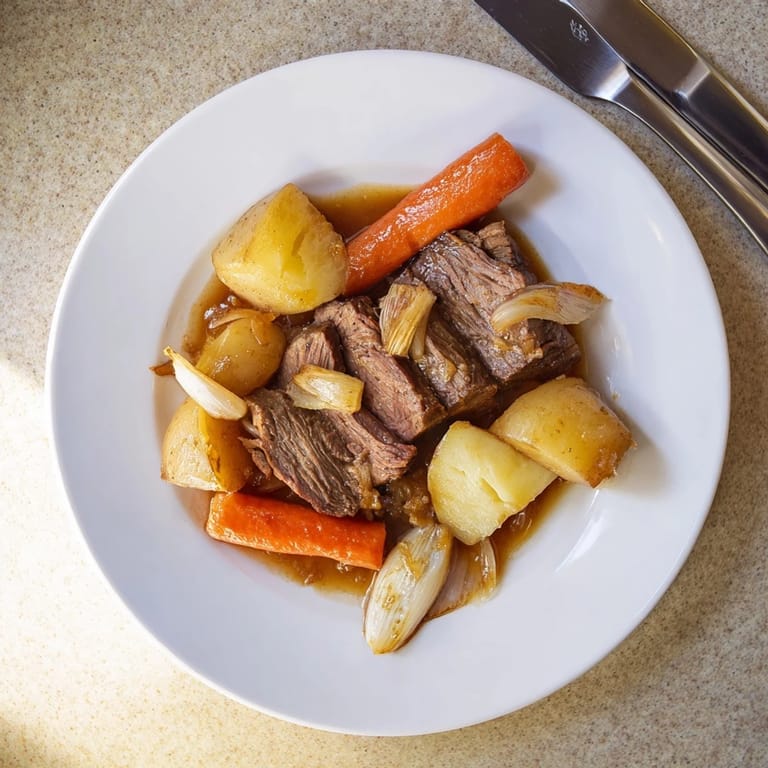
 Theres something profoundly satisfying about a dish that asks so little of you but gives so much in return. This is the kind of cooking that reminds you why you bothered to learn in the first place.
Common Questions
- → What cut of beef works best for pot roast?
Chuck roast is ideal due to its marbling and connective tissue that breaks down during slow cooking, resulting in tender, flavorful meat. Other options include brisket or round.
- → Can I make this in a slow cooker instead?
Absolutely. Brown the beef and sauté vegetables on the stovetop first, then transfer everything to your slow cooker. Cook on low for 8-10 hours or high for 4-6 hours until tender.
- → What can I substitute for red wine?
Additional beef broth works perfectly as a non-alcoholic alternative. For similar depth without wine, add a splash of balsamic vinegar or extra tomato paste.
- → How do I know when the roast is done?
Insert a fork into the thickest part of the meat. If it slides in and out easily with no resistance, the beef is properly tender. This typically takes 3-3.5 hours at 300°F.
- → Can I add other vegetables?
Certainly. Parsnips, celery, turnips, or mushrooms complement the flavors beautifully. Add hearty vegetables like parsnips with the potatoes, but quicker-cooking items like green peas should go in during the last 30 minutes.
- → How should I store leftovers?
Cool completely and refrigerate in an airtight container for up to 4 days. The gravy may congeal but will liquify when reheated. Leftovers also freeze well for 2-3 months.