 Save to Pinterest
 I discovered Tom Kha Gai not in a fancy restaurant, but in a cramped Bangkok apartment kitchen where my friend's mother was casually stirring a pot that smelled like nothing I'd ever experienced before. The steam rose up, carrying waves of lemongrass and coconut that made my eyes water in the best way, and within twenty minutes I understood why this soup had become legendary across Thailand. Now, whenever I make it, that same magic happens—the kind that stops conversation at the dinner table.
I made this for my roommate on a rainy Tuesday when she came home looking defeated by her day, and watching her face transform after that first spoonful made me realize soup could genuinely heal something inside a person. She asked for seconds before finishing her first bowl, and we ended up sitting on the kitchen floor talking until midnight, the pot going empty between us.
Ingredients
- Chicken broth, 3 cups: Use homemade if you can—it adds depth that store-bought sometimes lacks, though a quality box broth works perfectly fine in a pinch.
- Lemongrass, 1 stalk: Trim the tough outer layers and smash it gently with the side of your knife so the oils release into the broth and you actually taste its lemony-floral presence.
- Fresh galangal, 4 slices: This is the secret weapon that separates authentic from forgettable—it has a peppery, almost medicinal warmth that ginger can't quite replicate, though ginger works if you're truly stuck.
- Makrut lime leaves, 4 pieces: Tear them by hand right before adding so the fragrance fills your kitchen instantly and those oils don't escape into the air instead of your soup.
- Thai bird's eye chilies, 3: Crush them lightly rather than slicing—you want them to flavor the broth without making it undrinkably hot unless that's your style.
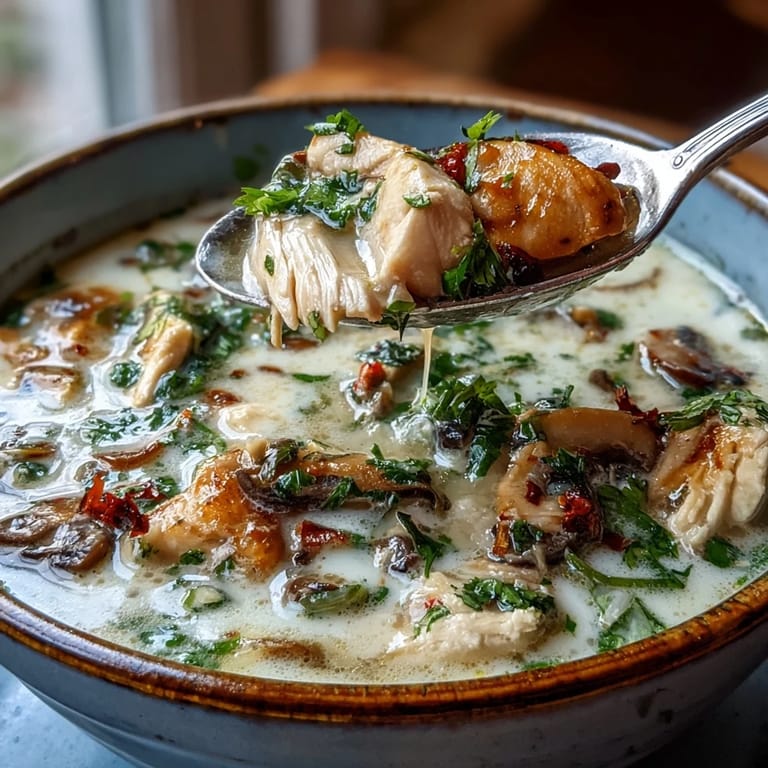
- Boneless, skinless chicken thighs, 1 lb: Slice them thin and they'll cook in minutes; thighs stay tender and juicy where breasts can turn stringy if you're not careful with timing.
- Full-fat coconut milk, 14 oz: Don't reach for the light version—this soup needs that richness to balance the acid and spice, and it's what makes every spoonful feel luxurious.
- Fresh mushrooms, 5 oz: Straw mushrooms are traditional and delicate, but cremini or button mushrooms absorb the broth beautifully and are easier to find at most grocery stores.
- Shallot, 1 medium: Slice it thin so it melts into the broth rather than sitting as chewy chunks—the sweetness becomes part of the soup's foundation.
- Fish sauce, 2 tbsp: I know it smells like a fishing dock, but trust it—this is where the umami lives, and it transforms from pungent to perfectly balanced once it simmers with everything else.
- Lime juice, 1 tbsp: Fresh lime is non-negotiable here; bottled can't give you that bright, alive quality that makes the soup sing.
- Palm sugar, 1 tsp: It has a deeper, less sharp sweetness than white sugar, but regular brown sugar works when you can't find it at Asian markets.
- Fresh cilantro and green onions: These are the final note that lifts everything—don't skip them or make this ahead without garnishing right before serving, or you lose that fresh herb magic.
Tired of Takeout? 🥡
Get 10 meals you can make faster than delivery arrives. Seriously.
One email. No spam. Unsubscribe anytime.
Instructions
- Build Your Aromatic Base:
- Pour the chicken broth into your pot and turn the heat to medium until small bubbles just start appearing around the edges—you want gentle, not aggressive. Add the smashed lemongrass, galangal slices, torn lime leaves, and crushed chilies, then let them swim together for five to seven minutes while you get everything else prepped, letting those fragrant oils infuse into the liquid.
- Cook the Chicken Through:
- Add your thinly sliced chicken thighs and the shallot slices directly into the simmering broth and cook for three to four minutes, stirring occasionally, until the chicken turns from raw-looking to opaque white. The residual heat will keep cooking it, so don't overdo it here or you'll end up with rubber.
- Bring in the Creamy Element:
- Toss in the mushroom slices, then pour the entire can of coconut milk right in, stirring gently to combine. Bring it back to a gentle simmer—this is important because vigorously boiling coconut milk can break and look separated and sad.
- Season to Your Perfect Balance:
- Add the fish sauce, palm sugar, and lime juice, stirring well so everything dissolves. Taste and adjust—if it's too salty, add lime juice; too sour, add a pinch more sugar; too bland, a bit more fish sauce. This is your moment to make it exactly how you want it.
- Finish and Serve:
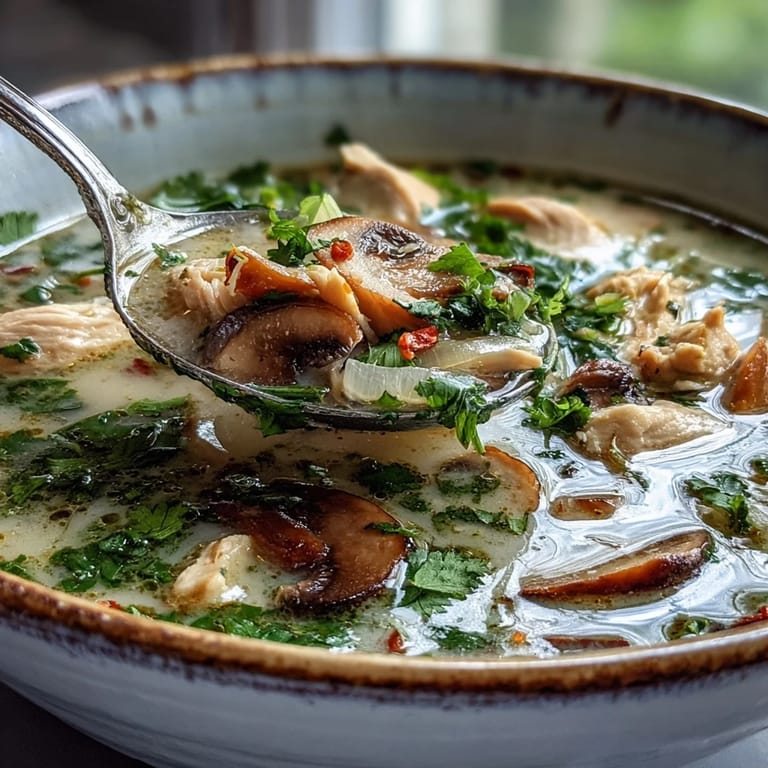
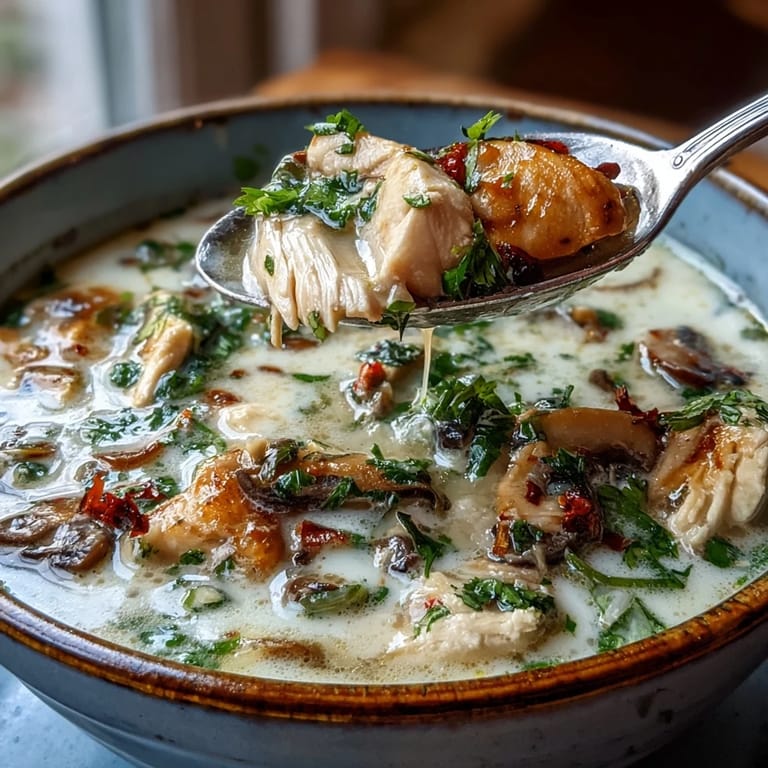
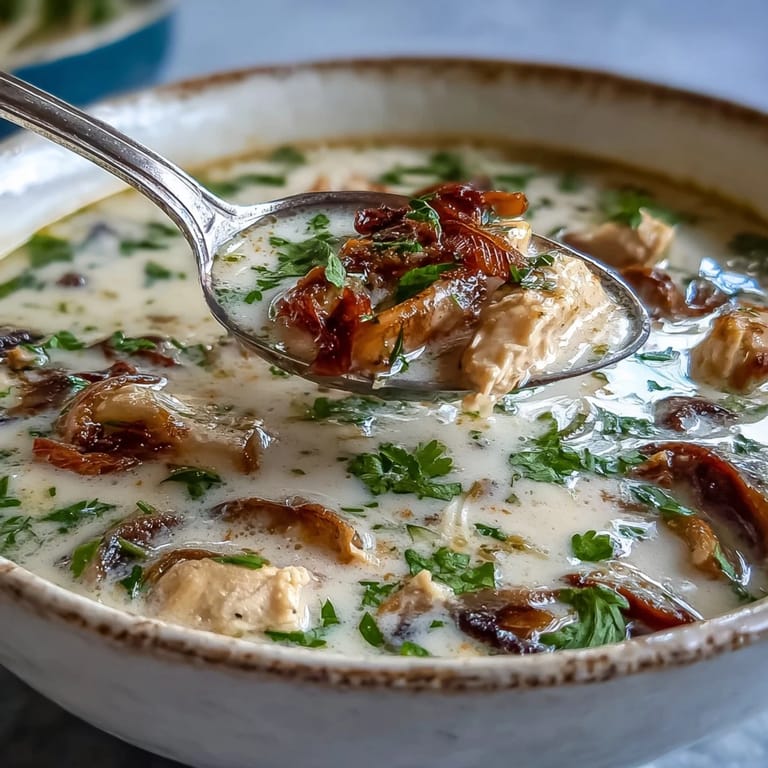
- Remove from heat and fish out the big pieces of lemongrass, galangal, and lime leaves if you prefer, though leaving them in creates a more rustic, authentic presentation. Ladle into bowls and scatter cilantro, green onions, and a lime wedge on top, letting people squeeze the juice in and customize their own bite.
 Save to Pinterest
  Save to Pinterest
 There was a moment during my second attempt at this soup when everything clicked—I'd gotten the timing right, the balance of flavors was hitting that perfect salty-sour-sweet triangle, and I suddenly understood why this dish appears on restaurant menus across the world. It's not fancy or complicated, but it's the kind of simple that only comes from understanding what each ingredient does and respecting the process.
Why Authentic Ingredients Actually Matter Here
I used to think galangal and makrut lime leaves were interchangeable with what I had in my pantry, until I finally sourced them from an Asian market and tasted the difference in one spoonful. The galangal brings a peppery, almost medicinal heat that ginger simply can't match, and those lime leaves have an intensity of flavor that makes the whole soup feel alive in a way substitutes can't achieve. Your local Asian market isn't far away, I promise, and they're usually cheaper there than anywhere else.
Adapting This Soup Without Losing Its Soul
Making it vegetarian is genuinely easy—swap vegetable broth for chicken broth, use firm tofu cut into small cubes instead of chicken, and replace fish sauce with soy sauce in equal amounts. The soup shifts slightly in character but stays delicious and authentic-tasting, and honestly, I've made it this way for vegetarian friends and they've asked for the recipe more than once. The coconut and aromatics carry the dish so completely that the protein is almost secondary.
Temperature and Timing Secrets
This soup is best served hot but not boiling—that gentle warmth is part of why it feels so comforting and why the flavors taste balanced rather than muddled. Make it ahead if you're cooking for guests, but don't reheat it at high heat; instead, warm it gently over medium heat or use the microwave with short intervals, stirring between them. The garnishes are where you save yourself—add them right before serving so the cilantro stays bright and the soup tastes like you just made it rather than like it's been sitting around.
- Always taste as you go and remember that you can add more fish sauce but you can't take it back.
- Fresh lime juice makes all the difference, so squeeze it just before serving rather than sitting in a bowl getting oxidized.
- Serve with jasmine rice on the side so people can make it more or less soupy depending on their mood.
 Save to Pinterest
  Save to Pinterest
 This soup became my emergency meal whenever I needed to feel better or feed someone who needed feeding, and it never disappointed. Now it's yours too—make it, adjust it, share it, and watch it become something people ask for.
Common Questions
- → Can I substitute galangal with regular ginger?
While fresh galangal is preferred for authentic flavor, you can substitute with fresh ginger in a pinch. Galangal has a more citrusy, pine-like flavor compared to ginger's spiciness, so the taste will be slightly different but still delicious.
- → How do I prevent the coconut milk from curdling?
Avoid boiling the soup vigorously once you add the coconut milk. Keep it at a gentle simmer and stir occasionally. Using full-fat coconut milk also helps prevent separation and curdling.
- → Where can I find makrut lime leaves?
Makrut lime leaves are available at most Asian grocery stores, particularly Thai or Southeast Asian markets. You can also find them frozen or order them online. Fresh leaves provide the best flavor and aroma.
- → Can I make this soup ahead of time?
Yes, Tom Kha Gai can be prepared ahead and refrigerated for up to 3 days. The flavors actually deepen over time. Reheat gently without boiling, and add fresh herbs and lime juice just before serving for the brightest flavor.
- → What can I serve with Tom Kha Gai?
This soup pairs beautifully with steamed jasmine rice for a complete meal. You can also serve it alongside spring rolls, Thai basil chicken, or other Thai dishes as part of a larger spread.
- → How spicy is this soup?
The heat level is adjustable based on the number of Thai chilies you use. Three chilies provide moderate heat. For a milder version, use one chili or omit them entirely. You can also serve extra chilies on the side for individual preference.