 Save to Pinterest
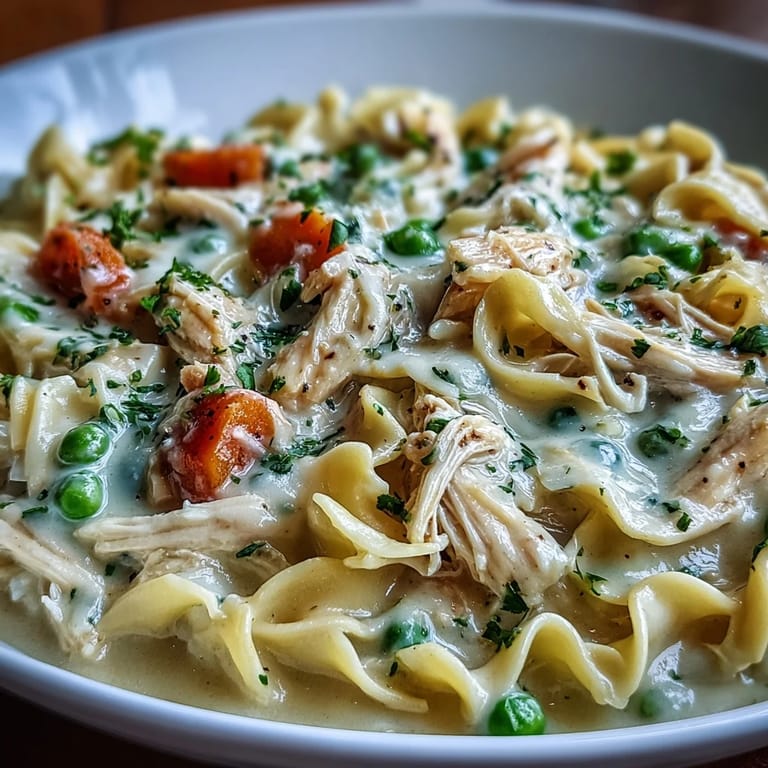
 My neighbor stopped by on a chilly March afternoon with a rotisserie chicken she'd picked up on a whim, and we stood in my kitchen wondering what to do with it. The sun was streaming through the window, and I had this sudden craving for something warm but not heavy, something that tasted like spring even though it was still technically winter. We started pulling together whatever we had—egg noodles, frozen peas, carrots—and within an hour, we'd created this skillet that somehow felt both comforting and bright at the same time.
I've made this dish for my kids more times than I can count, and I love watching them actually eat their vegetables because they're coated in that silky sauce and mixed in with the noodles they already love. It's become our go-to when someone's had a rough day and needs a little comfort, or when I'm too tired to think about what to cook but still want to feel like I've made something thoughtful.
Ingredients
- Cooked, shredded chicken (2 cups): Use rotisserie chicken if you're short on time—it's already seasoned and tender, which takes the guesswork out of cooking poultry from scratch.
- Wide egg noodles (8 oz): These wide noodles hold onto the sauce beautifully, unlike thin pasta that can get lost; cook them just until al dente because they'll soften slightly more when you fold them into the warm sauce.
- Frozen peas (1 cup): Frozen peas are a secret weapon because they're picked at peak ripeness and don't require extra cooking time, so they stay bright and maintain their sweetness.
- Diced carrots (1 cup): Pre-cut carrots save time, but if you have whole ones, dice them small so they actually soften in the 4 to 5 minutes of sautéing.
- Yellow onion, finely chopped (1 small): This builds the flavor foundation, and chopping it fine means it melts into the sauce almost invisibly while adding depth.
- Garlic, minced (2 cloves): Don't skip this step—garlic adds a subtle sweetness that balances the cream and makes the whole dish taste more sophisticated than it actually is.
- Unsalted butter (2 tablespoons): Butter creates the base for your roux and gives the sauce its silky texture; don't use margarine because it won't emulsify the same way.
- All-purpose flour (2 tablespoons): This thickens the sauce through the classic roux method, so it needs to cook for a minute after mixing with the vegetables to lose its raw taste.
- Low-sodium chicken broth (2 cups): Low-sodium is crucial because you'll be adding Parmesan cheese, which is salty, and you want control over the final seasoning.
- Whole milk or half-and-half (1/2 cup): Whole milk keeps the sauce lighter while half-and-half makes it richer; pick based on your mood and how many vegetables you're sneaking into this dish.
- Grated Parmesan cheese (1/4 cup): Freshly grated Parmesan melts more smoothly than pre-shredded varieties, which often contain anti-caking agents that can make the sauce grainy.
- Dried thyme (1/2 teaspoon): Thyme has this herbaceous warmth that whispers spring, and half a teaspoon is enough to season without overpowering.
- Black pepper (1/4 teaspoon): A light hand with black pepper keeps this dish from tasting peppery while still adding subtle spice.
- Salt (1/2 teaspoon, adjust to taste): Start with half a teaspoon and taste as you go because the chicken broth and Parmesan already contribute saltiness.
- Fresh parsley, chopped (2 tablespoons, optional): A sprinkle of fresh parsley at the end adds a pop of color and brightness that makes the dish feel intentional rather than just thrown together.
Tired of Takeout? 🥡
Get 10 meals you can make faster than delivery arrives. Seriously.
One email. No spam. Unsubscribe anytime.
Instructions
- Get your noodles ready:
- Bring a pot of salted water to a rolling boil and cook the egg noodles according to the package timing, but stop about a minute early so they're still slightly firm when you drain them. They'll continue softening as they sit in the warm sauce.
- Build your flavor base:
- Melt butter in your large skillet over medium heat, then add the chopped onion and diced carrots, stirring occasionally for about 4 to 5 minutes until the carrots start to soften and the onion becomes translucent. You'll notice the kitchen smelling sweeter as the vegetables release their natural sugars.
- Wake up the garlic:
- Add your minced garlic and stir constantly for just about 30 seconds, watching for that moment when the raw smell transforms into something fragrant and warm. This quick cooking prevents garlic from turning bitter.
- Make your roux:
- Sprinkle the flour over your cooked vegetables and stir everything together for about 1 minute, which cooks out the raw flour taste and creates the thickening base for your sauce. You're looking for a paste-like consistency that coats all the vegetables.
- Create the creamy sauce:
- Slowly pour in the chicken broth while whisking gently, then add the milk, thyme, salt, and pepper, continuing to whisk to prevent lumps from forming. Bring everything to a gentle simmer and let it bubble quietly for 3 to 4 minutes, stirring often, until it thickens slightly and coats the back of a spoon.
- Add the spring elements:
- Stir in the frozen peas, shredded chicken, and grated Parmesan cheese, mixing until everything is distributed evenly and the cheese melts into the sauce about 2 minutes. The peas will thaw from the residual heat, and the chicken will warm through without drying out.
- Bring it all together:
- Gently fold the cooked noodles into the skillet, stirring with a wooden spoon to coat each strand in the sauce, and let everything warm through for 1 to 2 minutes if needed. Remove from the heat before the noodles have a chance to absorb too much sauce and become mushy.
- Final touches:
- Transfer to serving bowls or plates and garnish with fresh parsley if you have it, which adds a brightness that cuts through the cream and makes the dish feel fresh. Serve warm while the sauce is still silky and the noodles are at their best.
 Save to Pinterest
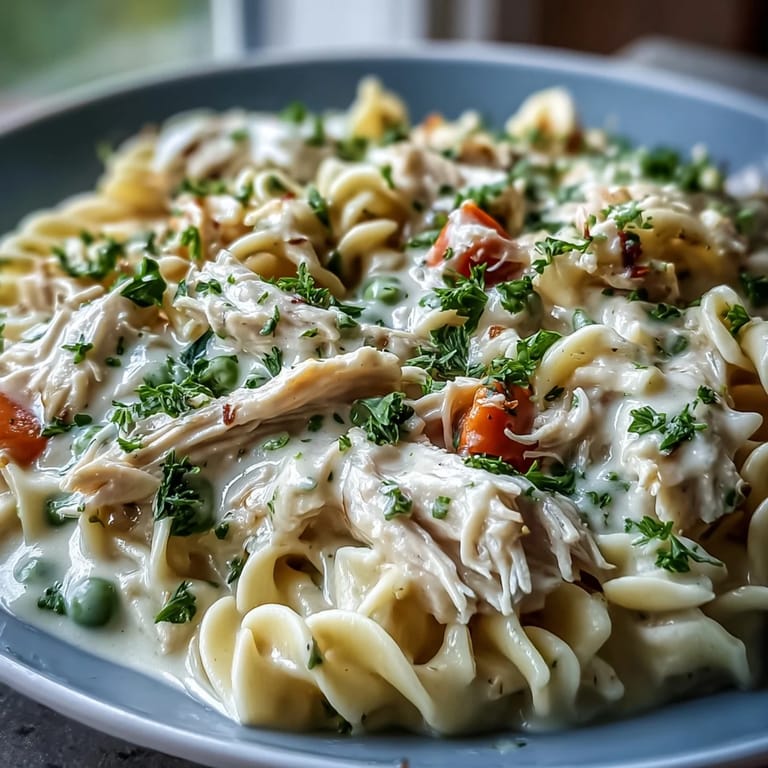
 There was this one evening when my daughter asked to help cook dinner, and we made this together with her standing on a step stool beside the stove, narrating everything we were doing. When we finally sat down to eat, she looked at her bowl and said it tasted like spring felt, and I realized this simple skillet had become more than just an easy dinner—it was a moment we'd made together.
Substitutions and Swaps
If you don't have rotisserie chicken on hand, you can poach chicken breasts in the chicken broth itself for about 12 to 15 minutes before draining and shredding them, which adds even more chicken flavor to your sauce. For the vegetables, feel free to swap in spring asparagus, fresh spinach folded in at the end, or even diced zucchini if you're looking to use what you have. Half-and-half creates a richer sauce, but whole milk keeps things lighter and less heavy—choose based on what you have in the refrigerator and how you're feeling about cream.
Why This Works as a Family Meal
This skillet ticks all the boxes for a family dinner because it has protein, vegetables, and carbohydrates all in one place, which means less negotiating about what's on the plate. The sauce is mild enough for kids but flavorful enough for adults, and the creamy coating makes even the pickiest eaters willing to give the vegetables a real chance. It's also forgiving enough that if you're interrupted mid-cooking, you can pause almost anywhere without ruining it, which is essential when dinner happens on a Tuesday.
Flavor Adjustments to Make It Your Own
Once you've made this basic version a few times, you'll start to see it as a canvas for your own preferences and whatever you have on hand. A squeeze of lemon juice stirred in just before serving adds brightness and cuts through the cream without making it taste sour, while a tiny pinch of ground nutmeg brings a subtle sweetness that feels sophisticated. Some nights I add a splash of white wine instead of some of the broth, and other times I stir in a handful of fresh dill or tarragon if I'm feeling adventurous.
- Try adding a tablespoon of Dijon mustard to the sauce for a subtle tang that complements the richness.
- A handful of fresh spinach stirred in at the very end adds iron and color without changing the taste significantly.
- If you want to make this a little fancier, drizzle with truffle oil after plating for an unexpected touch of luxury.
 Save to Pinterest
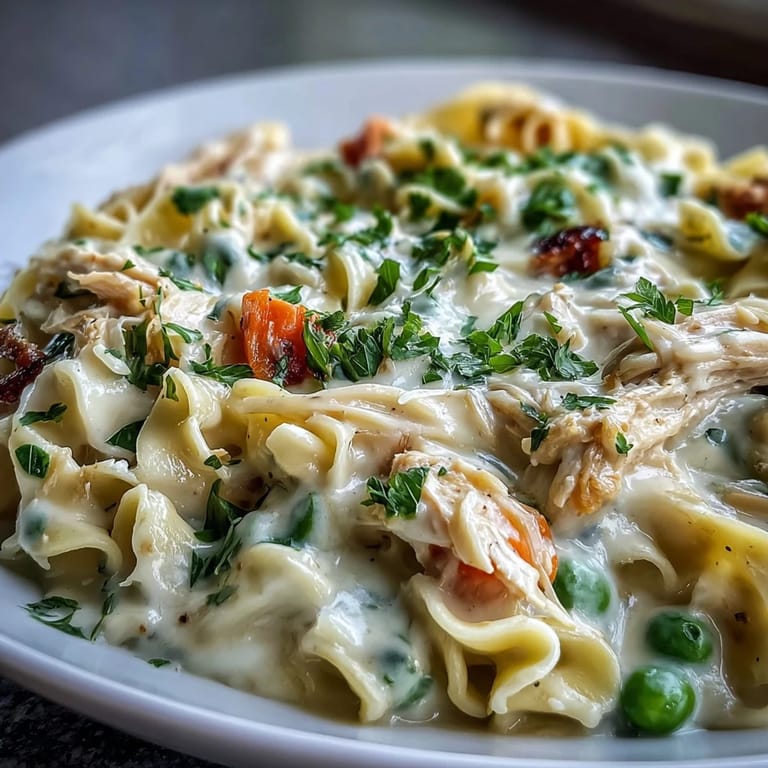
 This skillet has become the dish I make when I want to feel like I've cooked something real without spending hours at the stove. It's gentle enough to serve when someone's under the weather, crowd-pleasing enough for family dinners, and simple enough that even a beginner cook can pull it off without anxiety.
Common Questions
- → Can I use fresh pasta instead of dried egg noodles?
Fresh pasta works beautifully, though it cooks much faster than dried egg noodles. Reduce the cooking time accordingly and add it during the last few minutes of simmering to prevent it from becoming too soft.
- → What other vegetables can I add to this skillet?
Asparagus, baby spinach, diced bell peppers, or sugar snap peas all complement the flavors well. Add heartier vegetables like asparagus with the carrots, and delicate greens like spinach during the last minute of cooking.
- → Can I make this dish ahead of time?
You can prepare the sauce and vegetables up to a day in advance. Reheat gently before adding the cooked noodles and chicken, as the pasta may absorb more sauce and become softer upon reheating.
- → Is there a dairy-free alternative for the creamy sauce?
Substitute the butter with olive oil and use unsweetened almond milk or coconut milk instead of dairy milk. For the Parmesan, try nutritional yeast or a dairy-free Parmesan alternative to maintain that savory depth.
- → What type of chicken works best?
A store-bought rotisserie chicken offers excellent convenience and flavor. Alternatively, poach boneless chicken breasts in broth for 15-20 minutes, then shred. Leftover cooked chicken from another meal also works perfectly.
- → How do I store leftovers?
Store in an airtight container in the refrigerator for up to 3 days. Reheat gently with a splash of broth or milk to loosen the sauce, as the noodles will continue absorbing liquid while stored.